Many creators overlook the importance of thorough pre-flight planning, weather checks, and proper calibration when tracking runners and cyclists. Failing to take into account wind, rain, or temperature can cause safety issues or affect footage quality. You might also forget to respect local regulations and keep safe distances. Ensuring equipment readiness and clear communication are essential too. Pay attention to these details, and you’ll see how covering these areas makes your tracking safer and smoother—more tips await if you keep exploring.
Key Takeaways
- Regularly calibrate the drone to ensure accurate tracking and prevent erratic movements during fast-paced activities.
- Monitor weather conditions closely, especially wind and rain, to maintain control and avoid crashes.
- Maintain a safe distance from runners and cyclists to prevent collisions and ensure respectful filming.
- Plan the flight path carefully, respecting local regulations and no-fly zones for safe and legal operation.
- Ensure the drone’s equipment, including batteries and signal, is fully ready to prevent power loss or disconnections mid-track.
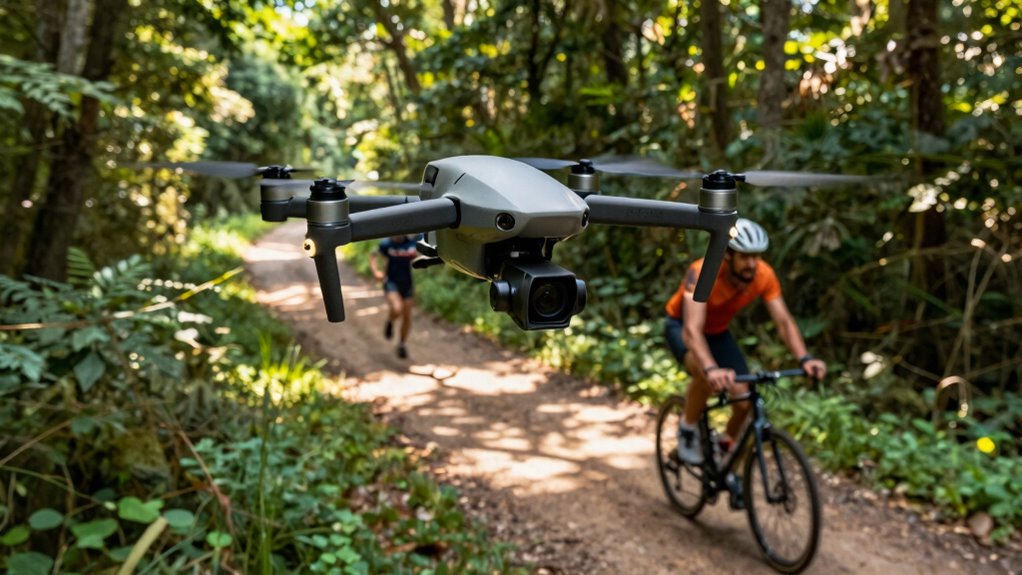
When you’re capturing footage of runners or cyclists with a drone, it’s easy to focus on the shot itself and overlook essential safety considerations. But before you hit record, you need to double-check your drone’s calibration. Proper drone calibration ensures your equipment’s sensors, compass, and IMU are aligned correctly. If these aren’t calibrated, your drone’s navigation could become erratic, risking crashes or loss of control. Take the time to run calibration routines, especially if you’ve traveled to a new location or after a firmware update. This step might seem minor, but it’s vital for maintaining safe, stable flight during fast-moving activities like running or cycling.
Calibrate your drone before flying to ensure safe, stable shots of fast-moving runners or cyclists.
Another often overlooked factor is weather considerations. Weather can change rapidly, especially outdoors, and what seems like a clear day could turn hazardous in minutes. Wind speed, in particular, can make your drone difficult to control, causing shaky footage or even crashes. Always check the local weather forecast before flying, and keep an eye on wind conditions, as high gusts can be dangerous. Rain or high humidity can damage your drone’s electronics, so avoid flying in wet conditions altogether. Temperature also matters—cold weather can affect battery life, leading to shorter flight times, while extreme heat might cause overheating issues. Being mindful of weather ensures your drone remains controllable and your footage stays safe and clear. Additionally, understanding drone regulation is essential to avoiding legal issues and ensuring safe operations in public spaces.
Beyond calibration and weather, many creators forget to plan their flight path carefully. When tracking runners and cyclists, you need to anticipate their movements and keep a safe distance. Flying too close can pose risks to the subjects and yourself, especially if sudden movements occur. Maintain a respectful buffer zone, and always communicate your intentions if your activity involves others. Also, be aware of any local regulations or restrictions. Some areas might have no-fly zones or require permits for drone operations, particularly in crowded or sensitive locations. Additionally, drone calibration is a crucial step that should never be overlooked to ensure accurate navigation and safety during your flight.
Lastly, don’t forget to check your battery levels and signal strength before launching. Running or cycling shots often require longer flight times, so ensure your drone is fully charged and your remote control has a strong connection. A sudden loss of power or signal can lead to dangerous crashes, especially when tracking fast-moving subjects. By paying close attention to calibration, weather, planning your flight path, and equipment readiness, you’ll not only get stunning footage but also keep everyone safe. Remember, the best shots come from responsible flying.
As an affiliate, we earn on qualifying purchases.
Frequently Asked Questions
How Do Weather Conditions Affect Drone Tracking Accuracy?
Weather conditions greatly impact your drone’s tracking accuracy. Wind turbulence can cause unstable flight, making it harder to keep your drone focused on runners or cyclists. Rain interference can disrupt sensors and reduce camera visibility, leading to blurry footage or tracking errors. You need to monitor weather closely, fly in calm conditions, and consider protective gear for your drone to guarantee safe, precise tracking during your shoots.
What Are the Legal Restrictions for Drone Tracking in Different Regions?
You need to know that regional regulations vary widely when it comes to drone tracking, and you must comply with local laws to avoid penalties. Privacy concerns are a major factor; many regions restrict flying over private property or capturing identifiable footage without consent. Always research the specific rules in your area and obtain necessary permits. Staying informed helps you operate safely and legally, ensuring your tracking activities are responsible and respectful of others’ privacy.
How Can Creators Ensure Battery Life During Long Tracking Sessions?
To guarantee your drone’s battery lasts during long tracking sessions, focus on battery management and power optimization. Start with fully charged batteries and carry spares. Use power-saving settings like lowering drone speed and disabling unnecessary features. Plan your shots efficiently, avoiding unnecessary movements. Monitor battery levels constantly, and land promptly when power drops. These steps help maximize flight time, so you capture all your footage without interruptions.
What Safety Measures Prevent Drone Crashes During High-Speed Tracking?
To prevent drone crashes during high-speed tracking, you should use a drone camera equipped with obstacle avoidance and maintain a clear line of sight. Keep an eye on signal interference, which can disrupt control and cause accidents. Regularly update firmware, calibrate sensors, and avoid flying near power lines or dense structures. These measures guarantee stable control and safe tracking, even at high speeds.
How to Choose the Best Drone for Tracking Runners and Cyclists?
To choose the best drone for tracking runners and cyclists, focus on drone stabilization and camera resolution. You want a drone with excellent stabilization to keep footage smooth during fast movements, and a high-resolution camera to capture clear, detailed shots. Consider models with advanced GPS and obstacle avoidance features for safe tracking. Balance battery life with performance, ensuring it can handle extended shoots without losing stability or image quality.
As an affiliate, we earn on qualifying purchases.
Conclusion
You chase the perfect shot, but remember, safety isn’t just about avoiding crashes; it’s about respecting the runner’s or cyclist’s space. While adrenaline fuels your creativity, a missed warning or reckless move can turn awe into tragedy in an instant. Balancing passion with caution means you preserve not just your equipment, but lives. Ultimately, capturing breathtaking footage shouldn’t come at the cost of someone’s safety—because the most powerful images are those made with care, not compromise.
As an affiliate, we earn on qualifying purchases.
As an affiliate, we earn on qualifying purchases.