To capture the excitement of drag racing, you need to master angles, lighting, and timing. Low angles and side shots emphasize power, while strategic lighting highlights the car’s design and speed. Watching the environment helps you anticipate key moments for the perfect shot. Adjust your camera settings to freeze motion and use different perspectives for variety. If you keep exploring these techniques, you’ll reveal the secrets to stunning drag racing photos that truly stand out.
Key Takeaways
- Combining diverse angles and spontaneous adjustments captures dynamic, powerful images that reflect the racing scene’s intensity.
- Proper lighting, including golden hour or artificial sources, enhances car details and reduces unwanted shadows.
- Understanding race environment and timing helps anticipate key moments for high-impact shots.
- Using fast shutter speeds freezes motion, ensuring clarity in high-speed action photography.
- Strategic positioning and knowledge of car movement improve shot composition and storytelling.
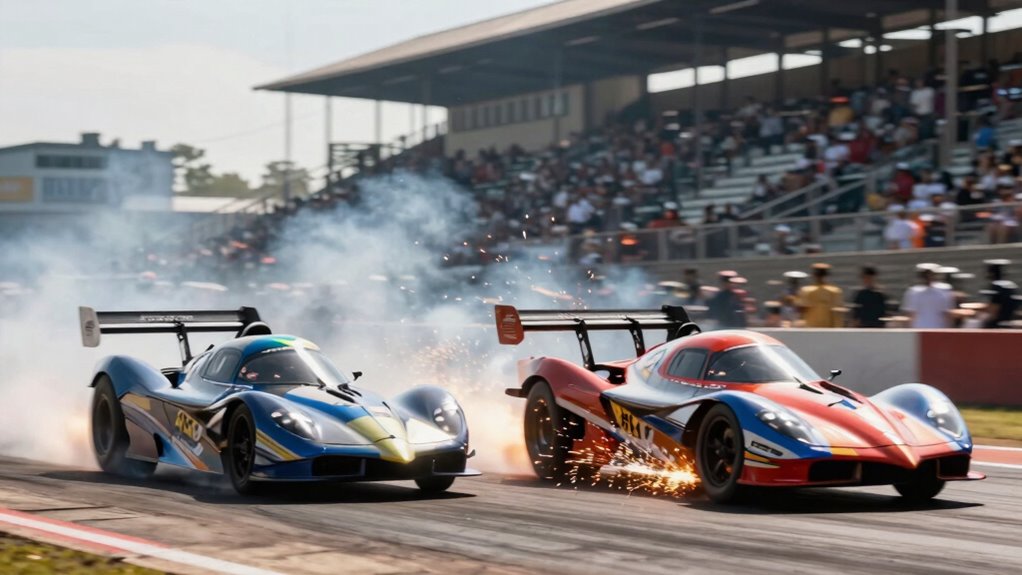
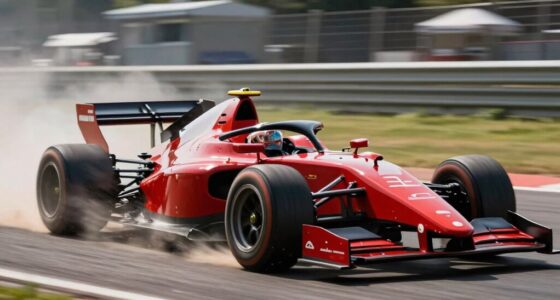
Capturing the high-speed excitement of drag racing can be challenging, but with the right techniques, you can freeze those adrenaline-pumping moments in stunning detail. The key lies in understanding race car angles and lighting techniques. When photographing these fast-paced events, choosing the right camera angles makes all the difference. Low angles often work best because they emphasize the power and speed of the car, giving viewers a sense of being right there on the track. Shooting from the side can showcase the car’s sleek design and the roaring engine, while a front or slightly upward angle can heighten the sense of motion and intensity. Experimenting with different perspectives helps you find unique shots that capture the essence of drag racing.
Low angles and side shots highlight power, speed, and sleek design in dynamic drag racing photography.
Lighting plays an equally crucial role in creating compelling images. During the day, harsh sunlight can cause unwanted shadows or overexposure, so use polarizing filters or shoot during the golden hour to achieve softer, more flattering light. If you’re photographing at night or in low light conditions, learn to leverage artificial lighting sources. Track lights and strobes can illuminate the car without washing out details, but make sure to balance your exposure to prevent overexposure or motion blur. Fast shutter speeds are essential here, allowing you to freeze the rapid movement without losing clarity. Also, pay attention to how light reflects off the car’s surface; strategic positioning can enhance the contours and make the vehicle pop in your images. Additionally, understanding the lighting environment can help you select the best settings and angles for your shot. Recognizing the regional culture of racing events can also give you insights into when and where to position yourself for the most dynamic shots. Recognizing the spectator behavior can provide clues about the most exciting moments to capture. Moreover, familiarizing yourself with the types of racing can influence your approach and the kind of shots you aim to get.
Combine your understanding of race car angles with effective lighting techniques to craft dynamic, sharp images. For example, shooting from a lower angle with side lighting can highlight the car’s aggressive stance and the gleam of its paint job, adding drama to your shot. Conversely, shooting from above with diffused light can reveal the details of the car’s bodywork and the track beneath, giving your photos a sense of scale and environment. Always anticipate the car’s movement and be ready to adjust your position quickly. The best shots often come from a combination of planned angles and spontaneous adjustments, especially as the cars accelerate down the track. Paying attention to the race schedule and understanding when the most exciting moments are likely to happen can also help you plan your shots more effectively.
In essence, mastering race car angles and lighting techniques transforms your drag racing photos from simple snapshots into powerful visual narratives. It’s about understanding how light interacts with your subject and positioning yourself to capture the most compelling view. With practice and attention to detail, you’ll be able to freeze those high-speed moments and share the thrill of drag racing in vivid, unforgettable images.
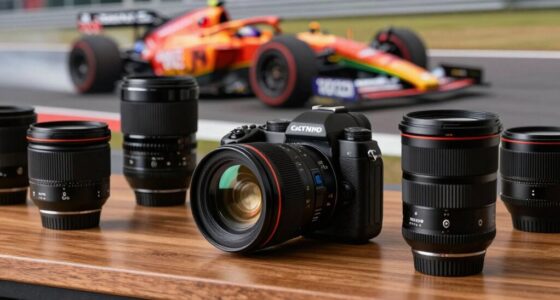
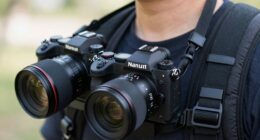
drag racing photography camera lens
As an affiliate, we earn on qualifying purchases.
As an affiliate, we earn on qualifying purchases.
Frequently Asked Questions
What Camera Settings Are Best for Capturing Fast-Moving Cars?
To capture fast-moving cars, set your camera to a fast shutter speed, like 1/1000 sec, to freeze motion. Use camera stability—either a tripod or steady hand—to prevent blur, and keep your focus sharp. Compose your shot with dynamic angles that highlight speed, and anticipate the cars’ movements. Adjust ISO if needed for proper exposure, but prioritize a fast shutter for crisp, action-packed images.
How Do I Prevent Motion Blur in High-Speed Shots?
To prevent motion blur in high-speed shots, you should use panning techniques, following the car smoothly with your camera while keeping your shutter speed high—around 1/1000 sec. Additionally, stabilize your camera with equipment like monopods or gimbals to reduce shake. Practice steady movements and focus tracking to keep the car sharp while capturing the dynamic sense of speed. These methods help you get crisp, action-filled images without unwanted blur.
What Lens Is Ideal for Drag Racing Photography?
They say, “the right tool makes all the difference,” and that’s true for drag racing photography. You’ll want a lens with a focal length between 70-200mm for versatility and close-up shots. Use an autofocus mode like AI Servo or Continuous to keep fast-moving cars in focus. This combination helps you capture crisp, dynamic images and get closer to the action without missing a beat.
How Do I Stay Safe While Photographing at the Track?
To stay safe while photographing at the track, always wear appropriate safety gear like ear protection and sturdy shoes. Keep within designated spectator zones to avoid moving vehicles and debris. Stay alert and aware of your surroundings, especially during high-speed runs. Never cross barriers or enter restricted areas. By following these precautions, you protect yourself and enjoy capturing exciting moments safely.
When Is the Best Time of Day for Optimal Lighting?
The best time of day for ideal lighting is during the golden hour, shortly after sunrise or before sunset, when lighting conditions are soft and warm. This reduces harsh shadows and enhances colors. Consider weather conditions too; clear days offer consistent lighting, while overcast skies provide diffused light that minimizes glare. Planning your shoot around these times ensures your photos capture the excitement with vivid detail and balanced exposure.

SPORT PHOTOGRAPHY: A Practical Guide to Capturing Fast Action and Emotion
As an affiliate, we earn on qualifying purchases.
As an affiliate, we earn on qualifying purchases.
Conclusion
Now that you’ve got the inside scoop on drag racing photography, you’re ready to hit the track with confidence. Remember, practice makes perfect, and patience is key — don’t rush the shot. Keep your camera sharp and anticipation high, because capturing that perfect moment is worth the wait. With a little grit and perseverance, you’ll turn your photos into true adrenaline-packed stories. So go ahead, take the plunge and show the world what you’ve got — fortune favors the bold.
polarizing filter for automotive photography
As an affiliate, we earn on qualifying purchases.
As an affiliate, we earn on qualifying purchases.
portable artificial lighting for night photography
As an affiliate, we earn on qualifying purchases.
As an affiliate, we earn on qualifying purchases.