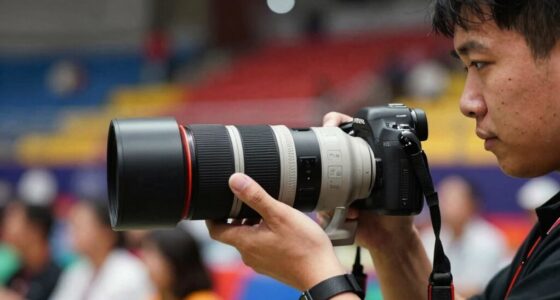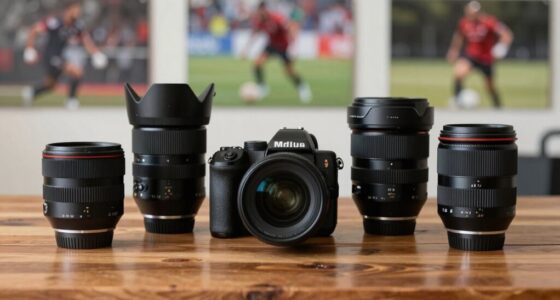
When comparing lenses for low-light photography, focus on fast apertures like f/1.8 or f/2.8 to maximize light intake. Check for high-quality coatings to reduce glare and enhance contrast, ensuring sharp, vibrant images. A sturdy build and versatile focal lengths, such as 24-70mm, are essential for flexibility in shooting conditions. Consider compatibility with your camera body and look for features like image stabilization. Stick around to uncover more tips to elevate your low-light game.
Key Takeaways
- Evaluate Aperture Size: Prioritize lenses with wider apertures (e.g., f/1.8, f/2.8) for superior light-gathering capabilities in low-light conditions.
- Check Lens Coatings: Opt for lenses with high-quality coatings to minimize glare and enhance contrast, ensuring clearer images in dim environments.
- Assess Build Quality: Choose lenses with sturdy construction to withstand challenging conditions, enhancing durability and performance during low-light shooting.
- Consider Focal Length Versatility: Look for lenses with versatile focal lengths (e.g., 24-70mm) to adapt to various low-light scenarios and capture fleeting moments.
- Research Compatibility and Features: Ensure lens compatibility with your camera body and consider features like image stabilization for improved low-light performance.
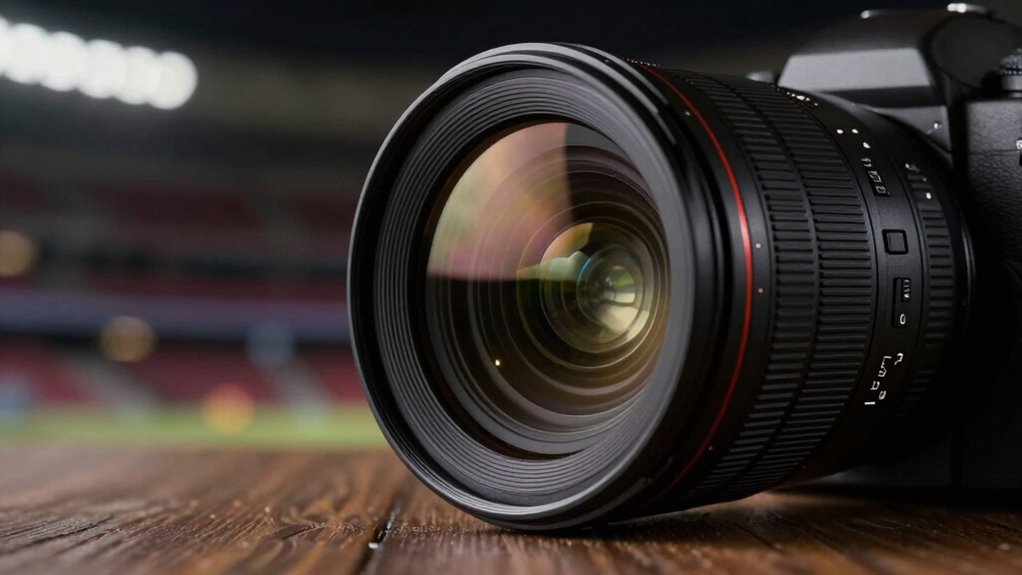
When you’re capturing moments in low light, choosing the right lens can make all the difference. You want to guarantee that your shots are sharp and vibrant, even when the lighting’s less than ideal. One of the first things to take into account is the lens’s aperture. A fast aperture, like f/1.8 or f/2.8, lets in more light, which can greatly enhance your ability to shoot in dim conditions. The wider the aperture, the better your chances of getting that perfect shot without resorting to higher ISO settings, which can introduce noise.
Choosing the right lens with a fast aperture can elevate your low-light photography, ensuring sharp and vibrant shots even in dim conditions.
Additionally, look for lenses with high-quality lens coatings. These coatings help reduce glare and improve contrast, allowing you to capture more detail in your low light images. You might not realize it, but the right coatings can make a considerable difference in how light interacts with your lens. When you’re shooting in dim environments, the last thing you want is to lose detail due to reflections or flare. High-quality coatings can help maintain clarity, guaranteeing your images remain sharp and vibrant.
When comparing lenses, pay attention to their build quality and focal length. A sturdy lens is vital if you’re shooting in challenging conditions, as you want something that can withstand a bit of movement. A versatile focal length, like a 24-70mm, can give you flexibility in framing your shots, whether you’re shooting wide landscapes or intimate portraits. This adaptability can be a lifesaver when you’re trying to capture fleeting moments in less-than-ideal conditions. Moreover, understanding the importance of lens compatibility** and how it impacts your overall gear setup can save you time and frustration. Investing in well-designed lens mounts** and knowing how they align with your camera body can also enhance your low-light shooting experience.
It’s also wise to take into account the lens’s compatibility with your camera body. Not all lenses work seamlessly with every camera, so make sure to check the specifications. Some lenses may have features that enhance low-light performance even further, like image stabilization, which can help prevent blurriness caused by camera shake. Furthermore, researching sensor size and how it interacts with lens performance can provide additional insight into achieving optimal results. Additionally, considering the lens’s aperture size can directly influence how well the lens performs in low-light situations, as a larger aperture allows more light to reach the sensor. Keep in mind that understanding lens design principles can also help you choose equipment that aligns with your specific shooting needs.
Finally, don’t forget to read reviews and test lenses when possible. Seeing how they perform in real-world conditions can help you make a more informed decision. Remember, what works for one photographer might not work for you, so trust your instincts. By taking the time to compare these essential elements, you’ll find the right lens that elevates your low-light photography to new heights. Happy shooting!

Canon EF 50mm f/1.8 STM Lens, Black, Compatible with Canon EOS DSLR Cameras
50 millimeter focal length and maximum aperture of f/1.8
As an affiliate, we earn on qualifying purchases.
As an affiliate, we earn on qualifying purchases.
Frequently Asked Questions
What Are the Best Brands for Low Light Lenses?
When you’re looking for the best brands for low light lenses, consider names like Canon, Nikon, and Sony. These brands have strong reputations for producing high-quality lenses that excel in dim conditions. You’ll also want to check out Sigma and Tamron, known for their lens durability and performance. Investing in these brands guarantees you get reliable gear that captures stunning images, even when the lighting isn’t ideal.
How Do I Clean My Low Light Lenses Properly?
They say, “A stitch in time saves nine.” To clean your low light lenses properly, start with a microfiber cloth and a gentle cleaning solution. Avoid paper towels or rough fabrics that can scratch. Lightly spray the solution on the cloth, not directly on the lenses, and wipe in circular motions. Regular lens maintenance tips include keeping them in a case when not in use and avoiding exposure to extreme temperatures.
Can I Use Low Light Lenses for Daytime Photography?
Yes, you can use low light lenses for daytime photography, but their daytime performance might not match that of dedicated daylight lenses. These lenses often excel in low-light conditions, but their versatility can allow for decent results in brighter environments. Just be mindful of potential glare and contrast issues. If you’re planning on shooting during the day frequently, you might want to contemplate a lens specifically designed for those conditions for the best results.
Are Low Light Lenses More Expensive Than Standard Lenses?
Yes, low light lenses often come at a higher price than standard lenses. This cost comparison is due to advanced lens technology that enhances light sensitivity and minimizes distortion. You’re investing in better performance, especially in challenging lighting conditions. While the upfront cost might be steeper, the improved image quality and versatility can make it worth it for your photography needs. Consider your budget and shooting style when making your choice.
Do Low Light Lenses Require Special Filters?
No, low light lenses don’t necessarily require special filters, but using the right filter types can enhance performance. For instance, a polarizing filter can reduce glare, improving visibility in dim conditions. Additionally, lens coatings can greatly impact light transmission and clarity. When you’re choosing lenses, consider these factors to optimize your low-light experience. It’s all about finding the right combination to suit your specific needs and shooting environment.

Sony SEL2470GM E-Mount Camera Lens: FE 24-70 mm F2.8 G Master Full Frame Standard Zoom Lens
SONY EMOUNT LENS: 35mm full frame format, instant auto / manual focus selection, focus hold button. The minimum…
As an affiliate, we earn on qualifying purchases.
As an affiliate, we earn on qualifying purchases.
Conclusion
When it comes to capturing stunning shots in low light, you can’t overlook the importance of your lens choice. Remember, “the right tool for the job” makes all the difference. Whether you opt for a fast prime or a versatile zoom, each lens has its strengths. So, don’t rush your decision—take the time to compare options, keeping your shooting style and needs in mind. You’ll find the perfect lens to illuminate those shadowy arenas.

Vbewo 2 Packs Professional Sleep Glasses with 99.9% Blue Light Blocking Dual AR Coatings Red Lens, Computer Gaming Glasses for Men Women, Anti Fatigue & Eye Strain
[ Professional Visual Optimization ] To achieve the maximum 99.99% blue light blocking required for deep sleep and…
As an affiliate, we earn on qualifying purchases.
As an affiliate, we earn on qualifying purchases.

Sigma 18-35mm F1.8 Art DC HSM Lens for Nikon
Designed specifically for APS-C sized sensors
As an affiliate, we earn on qualifying purchases.
As an affiliate, we earn on qualifying purchases.