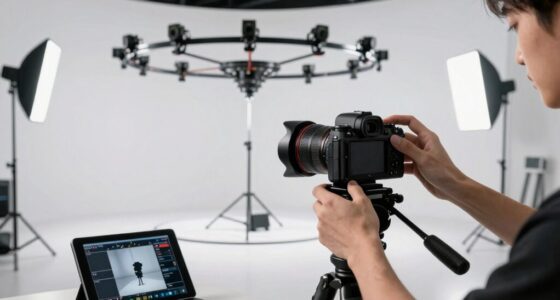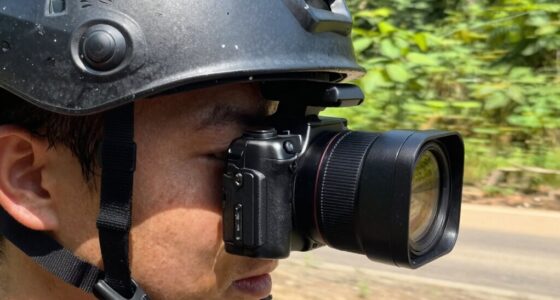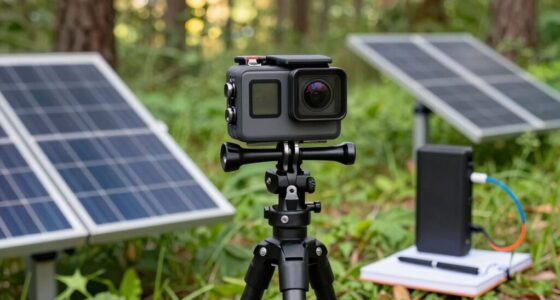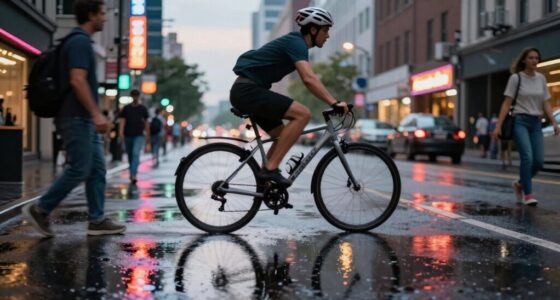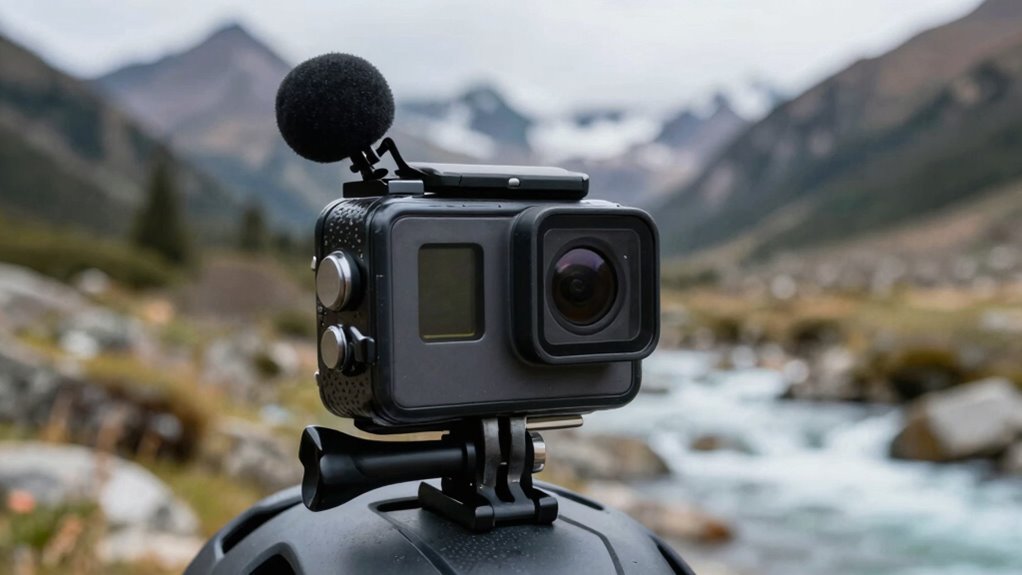

To get better action camera audio without rookie mistakes, start by using an external microphone to improve sound clarity and bypass your camera’s built-in mic limitations. Protect your mic from wind noise with windshields or furry covers, and experiment with microphone placement for maximum results. Consider syncing high-quality audio from portable recorders in noisy environments. Follow these tips, and you’ll discover more ways to elevate your sound skills as you continue exploring effective techniques.

Get sports gear delivered free with Prime
- Fast, free delivery on millions of items
- Prime Video, Amazon Music and more included
- Member-only deals all year
Key Takeaways
- Use external microphones and windshields to improve audio clarity and reduce wind noise in outdoor environments.
- Experiment with microphone placement close to the sound source to minimize ambient noise.
- Mount microphones in sheltered or strategic positions to enhance sound isolation and clarity.
- Sync external audio recordings with your footage during post-production for superior sound quality.
- Incorporate eco-friendly accessories and soundproofing techniques to create better recording conditions.
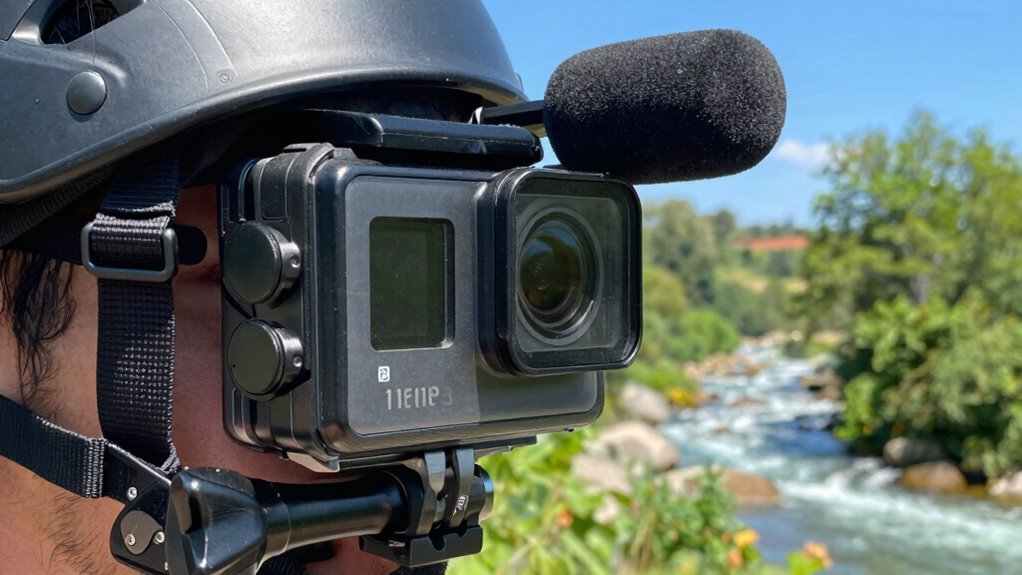
Have you ever captured stunning footage with your action camera only to be disappointed by poor audio quality? It’s a common frustration, especially when environmental noise ruins what could have been an incredible shot. Luckily, you can significantly improve your audio with a few simple adjustments and the right accessories. One of the best steps you can take is investing in quality audio accessories designed specifically for action cameras. External microphones, for instance, are a game-changer. They pick up clearer sound and help you bypass the built-in microphone’s limitations. Whether you’re recording in windy conditions or bustling environments, these accessories can dramatically elevate your audio quality.
Another crucial point is understanding environmental noise. During outdoor shoots, wind, traffic, and crowds can drown out your intended sound. To counter this, using windshields or dead cats on your microphones is essential. These accessories block wind turbulence and reduce unwanted noise, ensuring your audio remains crisp. Additionally, placing your microphone in a more sheltered position or closer to your source can make a major difference. Sometimes, just adjusting the angle or the mounting position of your microphone can cut down background noise and deliver clearer audio.
Beyond microphones, consider using foam or furry windshields that fit over your external microphone. They’re inexpensive but highly effective in reducing environmental noise. Remember, the goal is to isolate your sound source from disruptive ambient noise, not to silence everything entirely. Sometimes, you might need to experiment with different placements or accessories to find what works best in your specific environment. If you’re recording in particularly noisy areas, you could even look into portable audio recorders that sync with your camera in post-production, giving you a cleaner sound. Understanding biodiversity and sustainable practices can also inspire you to choose eco-friendly accessories and reduce waste when upgrading your gear. Moreover, being aware of soundproofing techniques can help you create better recording environments, especially in less controlled settings. Incorporating eco-conscious gear can also contribute positively to sustainable practices in the industry. Additionally, exploring sound isolation methods can further enhance your audio quality by minimizing external interference during recording sessions.
action camera external microphone
As an affiliate, we earn on qualifying purchases.
As an affiliate, we earn on qualifying purchases.
Frequently Asked Questions
Can Windshields Completely Eliminate Wind Noise?
A windshield can considerably reduce wind noise, but it won’t completely eliminate it. Windshield effectiveness depends on quality and placement, and some noise may still sneak through, especially in gusty conditions. To improve soundproofing methods, combine a good windshield with foam covers or dead cats for your microphone. This multi-layer approach offers better sound isolation, ensuring clearer audio and a more professional result in your action camera recordings.
What’s the Best Way to Monitor Audio During Recording?
Imagine peering through a clear window—this is how monitoring audio during recording feels. You should use dedicated audio accessories like headphones or wireless monitors, so you can listen in real-time. This helps catch issues early, saving time in sound editing later. Always monitor your audio through reliable gear, ensuring you capture clean sound and avoid surprises when editing. Proper monitoring keeps your footage professional and polished from start to finish.
Do External Microphones Require Special Mounting Accessories?
External microphones often require specific mounting options to guarantee compatibility and stability. You might need adapters or specialized mounts designed for your camera model, especially if using a shotgun or lapel mic. Always check microphone compatibility with your action camera and choose appropriate mounting accessories like shock mounts, clip mounts, or adhesive mounts. Proper mounting not only secures your microphone but also improves audio quality by reducing handling noise.
How Does Camera Placement Affect Audio Quality?
Your camera placement greatly influences audio quality. Proper camera orientation guarantees the microphone captures clearer sound, avoiding unnecessary background noise. Position the camera close to the sound source and consider microphone positioning to optimize audio clarity. Keep the microphone pointed toward the subject, and avoid placing the camera where wind or environmental sounds can interfere. Thoughtful camera placement and correct microphone positioning will greatly improve your action camera’s audio.
Is It Necessary to Use a Waterproof Housing for Better Sound?
Using a waterproof housing isn’t necessary for better sound; in fact, it can sometimes muffle audio. To improve your action camera’s sound, consider using audio accessories like external microphones or windshields. Waterproof housings are mainly for protection against water, not sound quality. If you want clear audio, opt for specialized accessories that enhance sound capture, and avoid sealing your camera tight unless using equipment designed for waterproof audio recording.
windshield for action camera microphone
As an affiliate, we earn on qualifying purchases.
As an affiliate, we earn on qualifying purchases.
Conclusion
Now that you know the secrets to capturing crystal-clear action camera audio, imagine your footage coming alive with crisp sounds that pull viewers right into the scene. But beware—the next step involves a challenge you didn’t see coming. Will your gear hold up under pressure? The choice is yours: perfect your setup or risk losing those precious moments to muffled, unusable sound. The difference between good and unforgettable footage is just one decision away.
portable audio recorder for filming
As an affiliate, we earn on qualifying purchases.
As an affiliate, we earn on qualifying purchases.
As an affiliate, we earn on qualifying purchases.
Halloween Picks
halloween
As an affiliate, we earn on qualifying purchases.