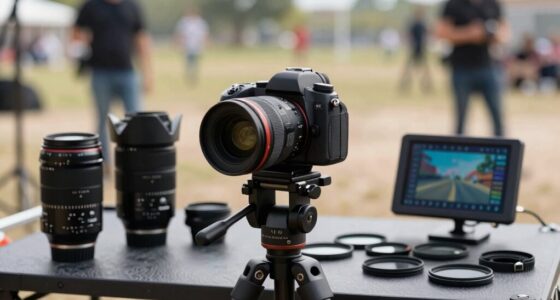
Continuous autofocus (AF) keeps your camera focused on moving subjects, making it essential for sharp action shots. It works differently across brands, so selecting the right mode—like AI Servo or Continuous AF—and customizing focus points improves tracking. Practice adjusting settings and mastering focus techniques to prevent hunts, drifts, or missed shots. If you want to discover simple tips for better autofocus and capture every fast-moving moment perfectly, there’s more to explore below.

Get sports gear delivered free — and shop member deals
- Fast, free delivery on millions of items
- Access to Prime Big Deal Days deals on October 6–7
- Prime Video, Amazon Music and more included
Key Takeaways
- Use tracking autofocus modes like AI Servo or Continuous AF for reliable focus on moving subjects.
- Select appropriate focus points or zones that follow the subject’s movement across the frame.
- Fine-tune autofocus speed and sensitivity to match scene dynamics and prevent focus hunting.
- Regularly calibrate your lens and camera system for optimal focus accuracy during motion.
- Practice tracking techniques and understand autofocus modes to improve focus consistency in dynamic scenes.
autofocus lens for sports photography
As an affiliate, we earn on qualifying purchases.
As an affiliate, we earn on qualifying purchases.
What Is Continuous Autofocus and Why Is It Important?

Ever wondered how photographers keep moving subjects sharp and in focus? That’s where continuous autofocus (AF) comes in. This setting allows your camera to automatically track and maintain focus on a subject as it moves across the frame. It’s essential for capturing fast action, whether you’re photographing sports, wildlife, or candid moments. Autofocus accuracy is key—if your camera can’t keep up, images can become blurry. Lens compatibility also matters; some lenses work better with continuous AF, especially those equipped with advanced focusing motors. By selecting the right autofocus mode and ensuring your gear supports smooth tracking, you’ll improve your chances of sharp, professional-looking shots. Understanding how autofocus settings work can help you optimize your camera’s performance. Additionally, being aware of the autofocus system capabilities can further enhance your ability to track subjects effectively. Proper autofocus calibration can also make a significant difference in achieving consistently sharp images. Regularly updating your camera’s firmware can also ensure that your autofocus system operates at its best performance. Investing in compatible lenses can further enhance autofocus responsiveness in dynamic shooting scenarios. Continuous AF keeps your subject crisp, no matter how hectic the scene gets.
camera with continuous autofocus
As an affiliate, we earn on qualifying purchases.
As an affiliate, we earn on qualifying purchases.
How Does Autofocus Work on Different Camera Brands?

Different camera brands implement autofocus systems in unique ways, which can influence how effectively they track moving subjects. Autofocus algorithms vary, with some brands prioritizing speed, while others focus on accuracy and face detection. These differences impact how well your camera maintains focus during motion. Lens compatibility also plays a vital role; certain autofocus features work best with specific lens types, affecting performance. For example, some brands optimize their autofocus for their own lenses, leading to smoother tracking, while others offer broader compatibility but may sacrifice some precision. Understanding these distinctions helps you choose the right camera and lens combination for dynamic shooting situations. Additionally, being aware of each brand’s autofocus system design can help you make more informed decisions when selecting equipment. Recognizing the autofocus system differences across brands allows photographers to tailor their gear choices to specific shooting scenarios, especially in fast-moving environments. Moreover, familiarity with how each autofocus system handles tracking moving subjects can significantly improve your chances of capturing sharp images in challenging conditions. Knowing how various autofocus technologies operate provides further insight into optimizing focus performance for different scenarios. Ultimately, knowing how each brand’s autofocus system works enables you to maximize its potential for capturing sharp, in-focus images of moving subjects.
As an affiliate, we earn on qualifying purchases.
How to Choose the Best Autofocus Settings for Moving Subjects

Choosing the right autofocus settings for moving subjects is essential to capturing sharp, in-focus images. First, consider your camera ergonomics—how comfortably you can operate and access autofocus controls during fast motion. Second, check lens compatibility; some lenses perform better with specific autofocus modes. Third, select a tracking mode suited for your subject, like AI Servo or Continuous AF, to maintain focus as it moves. Fourth, customize autofocus points to match your subject’s path, avoiding distractions. By understanding your camera’s ergonomics and lens compatibility, you’ll optimize your autofocus setup. This guarantees quick, accurate focus, even in unpredictable scenes, helping you capture sharp images with confidence.
As an affiliate, we earn on qualifying purchases.
Top Tips for Better Autofocus on Fast-Moving Scenes
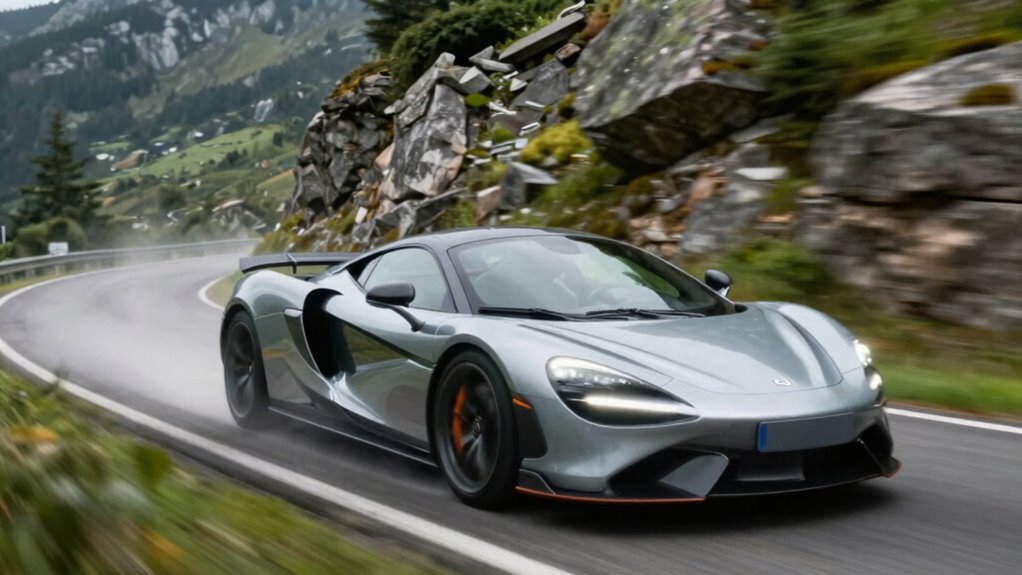
To get sharp photos of fast-moving scenes, you need to master your autofocus system. Use autofocus technology like tracking modes to keep subjects in focus as they move unpredictably. Adjust camera ergonomics to guarantee quick, comfortable handling—this minimizes missed shots. Practice half-pressing the shutter to lock focus before capturing the moment. Anticipate your subject’s movement for better results. Here’s a quick guide:
| Tip | Why it matters | How to implement |
|---|---|---|
| Use Continuous AF | Maintains focus on moving subjects | Switch to AI Servo or AF-C mode |
| Focus points selection | Precision in fast action | Use dynamic or zone focusing |
| Keep steady grip | Reduces camera shake | Use both hands, stabilize your stance |
| Practice panning | Blurs background, sharp subject | Move camera smoothly with subject |
| Adjust focus speed | Match scene speed | Fine-tune autofocus settings |
Additionally, understanding your camera’s autofocus algorithms can significantly improve tracking accuracy. Knowing how different autofocus modes function allows for better customization based on scene requirements. Recognizing autofocus behavior in different scenarios can help you adapt your technique for optimal results. Being familiar with your camera’s autofocus settings can also help you quickly adapt to changing conditions, especially in fast-paced environments.
Common Autofocus Mistakes and How to Avoid Them

Autofocus mistakes are common pitfalls that can ruin even the best shots, but many are easily preventable with awareness and proper technique. One mistake is neglecting autofocus calibration, which causes your camera to focus inaccurately. Confirm your lens is compatible with your camera body to avoid focus hesitation or errors. Another error is relying solely on a single autofocus point when tracking fast-moving subjects, leading to missed focus. Additionally, using a lens with poor autofocus compatibility can result in hunting or inconsistent focusing. Finally, not double-checking focus before shooting or switching autofocus modes during action can cause soft images. To prevent these issues, regularly calibrate your autofocus system and verify lens compatibility, especially when changing equipment or shooting dynamic scenes. Incorporating proper autofocus techniques can significantly improve your results and help avoid these common mistakes. Being aware of autofocus system limitations can also help you choose the right settings for different scenarios.
Should You Use Single or Continuous Autofocus? Here’s How to Decide

When photographing moving subjects, selecting the right autofocus mode can make all the difference in capturing sharp images. Use continuous autofocus (AF-C or AI Servo) when your subject moves unpredictably or changes direction often. It maintains focus as your subject shifts, improving autofocus accuracy during motion. Conversely, switch to single autofocus (AF-S or One-Shot) for static or slow-moving subjects, guaranteeing sharpness without unnecessary adjustments. Your camera’s ergonomics also influence this choice; if your camera feels comfortable switching modes quickly, you can adapt to different situations seamlessly. Understanding your subject’s speed and your camera’s responsiveness helps you decide which autofocus mode suits best. This guarantees you get sharp, well-focused shots with minimal frustration, regardless of movement.
Troubleshooting Autofocus Problems During Action Shots

Even with the right autofocus mode, issues can still arise during fast-paced action shots, causing your images to come out blurry or out of focus. To troubleshoot, start by checking autofocus calibration—misaligned calibration can prevent your camera from locking focus accurately. Next, verify lens compatibility; incompatible or poor-quality lenses may struggle with moving subjects. Consider these common problems:
- Focus hunting as the camera searches for focus, leading to missed shots.
- Inconsistent focus points drifting off the subject.
- Lagging autofocus response during rapid movements.
- Front or back focusing issues caused by misalignment or calibration errors.
- Ensuring your camera’s autofocus system is optimized for dynamic subjects can significantly improve focus accuracy during action shots. Additionally, understanding how autofocus settings interact with different shooting conditions can help you make better adjustments for moving subjects.
Addressing these issues involves adjusting autofocus calibration, ensuring your lens is suitable for action, and keeping your gear properly maintained for peak performance.
Practicing Autofocus to Capture Sharp, Moving Subjects

To improve your autofocus skills, start by mastering your focus points and how they interact with your subject. Practice tracking moving subjects to see how well your camera maintains focus, and experiment with adjusting autofocus settings for different scenarios. Consistent practice will help you capture sharp, clear images even in fast-paced situations. Additionally, understanding your camera’s autofocus modes can make a significant difference in achieving the desired results. Developing a familiarity with focus point selection can also enhance your ability to keep moving subjects sharp and in focus.
Master Focus Points
Mastering focus points is essential for capturing sharp, moving subjects. Your choice of focus point selection directly impacts image clarity. Visualize this:
- You select a single autofocus zone, pinpointing a specific eye or object.
- You switch to dynamic autofocus zones, letting your camera choose the best point as your subject moves.
- You use wide autofocus zones, covering a broad area to track unpredictable movement.
- You rely on automatic focus modes, trusting your camera’s algorithms to adapt instantly.
Practice Tracking Moving Subjects
Practicing how to track moving subjects is essential for capturing sharp, clear images in dynamic situations. Whether you’re shooting sports photography or wildlife tracking, staying focused on fast-moving subjects takes deliberate practice. Start by panning smoothly to follow their movement, keeping your autofocus locked on the subject. Use continuous autofocus modes like AI Servo or AF-C to maintain focus as they move unpredictably. Practice tracking in different environments and lighting conditions to build confidence and responsiveness. Try shooting bursts to improve your timing and accuracy. Over time, you’ll develop a better instinct for anticipating movement, which helps your autofocus keep up. Consistent practice makes tracking feel natural, ultimately leading to sharper, more professional-looking images of moving subjects.
Adjust Autofocus Settings
Adjusting your autofocus settings is essential for reliably capturing sharp images of moving subjects. First, verify proper autofocus calibration; this aligns your camera’s focus system with your lens for accurate tracking. Next, check lens compatibility—some lenses perform better with specific autofocus modes, so confirm compatibility to avoid focus hunting. Then, select the appropriate autofocus mode, such as continuous or tracking modes, to keep moving subjects sharp. Finally, customize AF area modes—like dynamic points or zones—to suit your subject’s movement. Visualize locking onto a runner, a cyclist, a bird in flight, or a speeding car. Each scenario benefits from tailored autofocus settings, ensuring your camera responds swiftly and accurately, regardless of how fast or unpredictable the subject moves.
Frequently Asked Questions
Can Autofocus Settings Be Customized for Different Sports or Activities?
Yes, you can customize autofocus settings for different sports or activities. Autofocus customization allows you to optimize your camera’s performance, ensuring sharp shots of fast-moving subjects. Many cameras offer sports-specific settings, enabling you to switch quickly between modes tailored for activities like soccer, tennis, or action photography. By adjusting these settings, you improve autofocus accuracy and tracking, helping you capture clearer, more dynamic images regardless of the sport or activity you’re shooting.
How Does Weather Affect Continuous Autofocus Performance?
You might think weather conditions don’t impact autofocus reliability, but they definitely do. Rain, fog, or snow can interfere with your camera’s sensors, making continuous autofocus less accurate. Wind or extreme cold can shake your camera, too. To keep autofocus performing well, use weather-sealed gear, adjust your settings for challenging conditions, and stay aware of how weather might be affecting your shots. That way, your focus stays sharp even in tough weather.
Is There a Difference in Autofocus Speed Between Mirrorless and DSLR Cameras?
Yes, there’s a difference in autofocus speed between mirrorless and DSLR cameras. Mirrorless models usually have less autofocus lag because they use on-sensor phase detection or contrast-detection, providing quicker focus for moving subjects. DSLR autofocus can be slower due to mirror movement, but offers focus reliability through dedicated autofocus sensors. Your choice depends on whether you prioritize speed or consistency, especially in dynamic shooting situations.
How Do Lens Choices Impact Autofocus Accuracy on Moving Subjects?
Your lens choices act like a guiding compass for autofocus accuracy on moving subjects. A wider lens aperture allows more light, helping autofocus zones lock onto subjects swiftly, especially in low light. Using lenses with multiple autofocus zones enhances tracking precision, ensuring your camera follows fast-moving objects smoothly. Opting for a lens with advanced autofocus technology can turn chaos into clarity, transforming motion into a perfect shot with sharp focus.
Can Autofocus Be Combined With Manual Focus for Better Results?
Yes, you can combine autofocus with manual focus techniques for better results. Start with autofocus to quickly lock onto your moving subject, then switch to manual focus for fine-tuning. Use autofocus calibration to guarantee your lens’s focus accuracy, especially if you notice slight focus shifts. This hybrid approach gives you the speed of autofocus and the precision of manual focus, helping you capture sharp images of moving subjects.
Conclusion
Mastering continuous autofocus is your secret weapon for sharp, action-packed shots. By understanding how it works across brands and practicing smart settings, you’ll avoid common pitfalls—no need to channel a medieval squire! Think of autofocus as your trusty steed in a digital joust, always ready to keep your moving subjects crisp. Keep experimenting, stay patient, and soon you’ll be capturing moments so clear, they’ll seem almost plucked from a Renaissance painting.
Fall Picks
fall essentials
As an affiliate, we earn on qualifying purchases.