ND filters are essential for drone pilots because they help control exposure in bright light, preventing overexposed footage and maintaining sharpness. By reducing the light entering your camera, they give you better control over shutter speed, resulting in smoother, more professional-looking videos. ND filters also minimize motion blur and stabilize footage during turbulent conditions. If you want to access the full potential of your drone camera and learn how to maximize these benefits, keep exploring further.
Key Takeaways
- ND filters reduce light entering drone cameras, preventing overexposure in bright conditions for clearer footage.
- They help maintain optimal shutter speed, ensuring smooth, cinematic drone videos without motion blur.
- ND filters enable creative effects like smoothing water or clouds, enhancing artistic control in aerial shots.
- They improve image stability and sharpness by minimizing motion blur caused by turbulence or rapid movements.
- Using ND filters is essential for professional-quality drone footage, especially in bright outdoor environments.

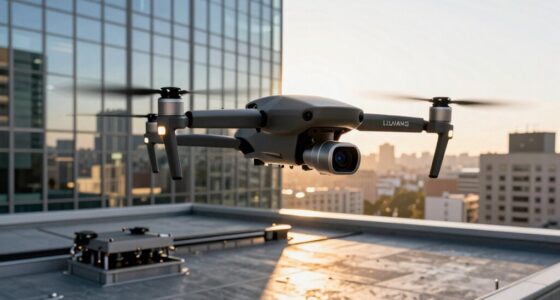
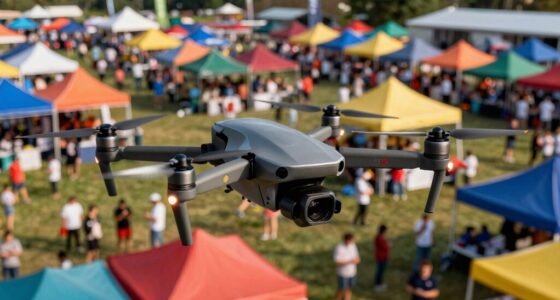
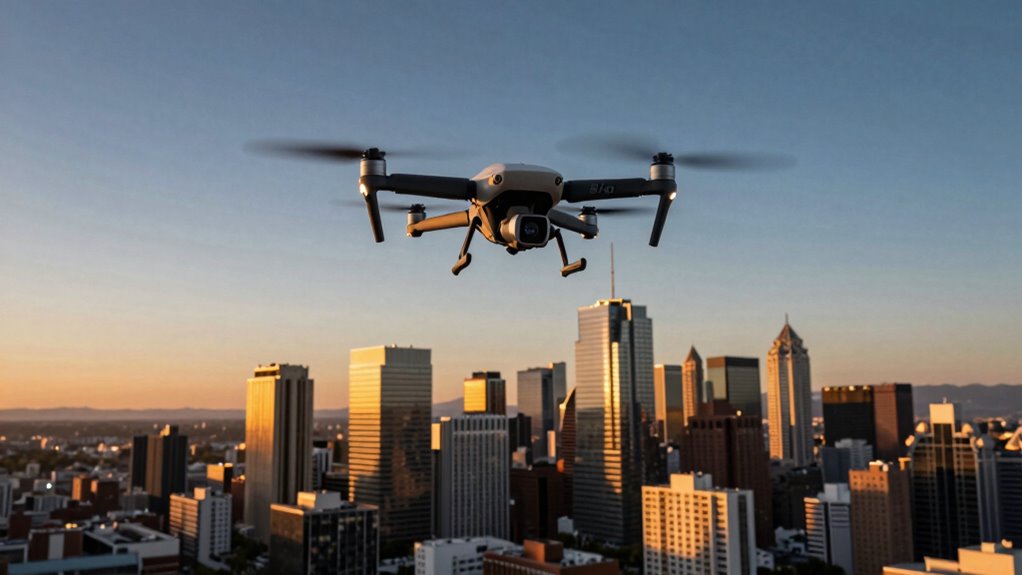
When capturing stunning aerial footage with your drone, ND filters can make a significant difference. They’re essential tools for improving the quality of your shots, especially when you’re aiming for professional-grade results. ND filters, or neutral density filters, work by reducing the amount of light entering your camera lens. This control over exposure allows you to shoot in bright conditions without overexposing your images, making your footage look more natural and vibrant. Whether you’re filming sweeping landscapes or fast-moving subjects, ND filters help you maintain the right exposure levels, even in harsh sunlight.
ND filters improve aerial footage by controlling exposure, ensuring vibrant, natural shots in bright sunlight.
In aerial photography, maintaining proper camera settings is crucial, and ND filters help you achieve just that. When you’re flying high and capturing vast scenery, you want your footage to be smooth and cinematic. Without ND filters, you might have to rely on slow shutter speeds or compromise on aperture settings, which can introduce motion blur or unnatural depth of field. With the right ND filter, you can keep your shutter speed at the optimal level—generally double your frame rate—to produce crisp, professional-looking footage. This results in smoother motion, less flickering, and a more polished final product.
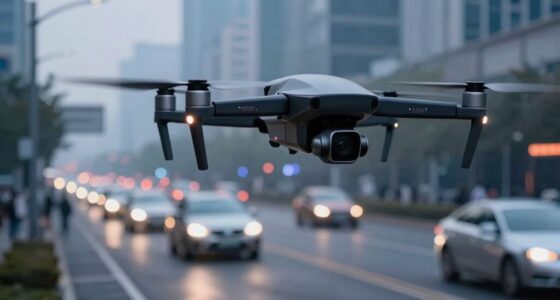
Camera stabilization is another key benefit of using ND filters while flying your drone. When you reduce the amount of light reaching your sensor, you can use wider apertures and faster shutter speeds. This combination minimizes motion blur caused by drone vibrations or turbulence, leading to sharper images and more stable footage. Plus, when you’re shooting in bright conditions, the extra light can force you to slow down your shutter speed, which can cause flickering or jittery motion. ND filters eliminate this problem by controlling exposure levels, enabling your drone’s gimbal to work more effectively and keep your camera stable. Understanding exposure control is fundamental to capturing high-quality footage in various lighting environments.
Using ND filters also gives you greater creative control. You can intentionally smooth out water or clouds, create motion blur effects, or enhance the overall cinematic quality of your shots. This flexibility allows you to craft visually compelling aerial photography that stands out. In addition, the consistent exposure you get with ND filters means your camera’s auto settings won’t fluctuate as much, resulting in more uniform footage during long shoots. This consistency makes editing easier and improves the overall professionalism of your work. Proper knowledge of filter types and their impact on exposure can further enhance your ability to shoot with precision.
The use of ND filters can also help you prevent overexposure, especially in bright lighting conditions, ensuring your footage remains detailed and balanced. Additionally, understanding how different filter densities influence exposure can help you select the right filter for specific lighting scenarios, making your footage more dynamic and visually appealing. In essence, ND filters are vital accessories for anyone serious about aerial photography. They enhance your camera stabilization, help manage exposure in diverse lighting conditions, and unlock creative possibilities. Proper use of ND filters also involves understanding how they impact exposure and motion, which can significantly improve the quality of your drone footage. When used correctly, they elevate your drone footage from amateur to professional, giving your shots that smooth, polished look that viewers love.

NEEWER ND Filter Set Compatible with DJI Mini 3 / Mini 3 Pro, CPL ND8 ND16 ND32 ND64 ND128 Neutral Density Filter Drone Video Photography Accessories, 6 Pack
- Lightweight Aluminum Frame: Only 1.2g, easy to install
- 30-Layer Optical Coating: Reduces glare, UV protection, waterproof
- CPL Filter for Clarity: Enhances colors, reduces glare, improves detail
As an affiliate, we earn on qualifying purchases.
As an affiliate, we earn on qualifying purchases.
Frequently Asked Questions
Can ND Filters Improve Drone Footage in Low-Light Conditions?
Yes, ND filters can improve your drone footage in low-light conditions by reducing light entering the camera, allowing you to maintain ideal sensor sensitivity and avoid overexposure. They also help you adjust the aperture smoothly without sacrificing image quality. By controlling exposure, ND filters enable you to achieve cinematic motion blur and better color grading, resulting in sharper, more professional-looking footage even when lighting is less than ideal.
Are ND Filters Compatible With All Drone Camera Models?
ND filters aren’t compatible with all drone camera models, as compatibility depends on lens size and filter thread design. You should check your drone’s specifications and confirm the filter materials and lens coatings match your camera. Some filters use high-quality coatings to reduce glare, while others might not suit certain lenses. Always verify that your drone’s camera has the right filter thread size before purchasing an ND filter.
How Do ND Filters Affect Drone Flight Stability?
ND filters don’t directly affect your drone’s flight stability, but they can influence your camera settings, requiring sensor calibration adjustments. By reducing light, ND filters help you achieve better exposure, which enhances your footage for color grading later. Proper calibration guarantees smooth shots, preventing vibrations or jitter from affecting stability. So, while ND filters improve image quality, maintaining stable flight also depends on your drone’s hardware and piloting skills.
What’s the Best ND Filter for Fast-Moving Drone Shots?
For fast-moving drone shots, a variable ND filter with a higher density, like ND16 or ND32, is your best bet—think of it as sunglasses for your camera. It preserves sensor clarity and maintains color accuracy, even in rapid motion. This filter lets you balance shutter speed and light, so your footage stays sharp and vibrant without overexposure, turning fast action into cinematic magic.
Do ND Filters Impact Drone Camera Autofocus Performance?
ND filters can subtly impact your drone camera’s autofocus adjustment, especially in changing light conditions. They may require a moment for the autofocus to stabilize, but generally, image sharpness remains high if you choose quality filters. You might experience minor delays, but with proper use, ND filters don’t profoundly hinder autofocus performance. To optimize results, verify your camera’s settings are adjusted accordingly, and select filters suited for your shooting environment.

Freewell Split ND Filters 4-Pack for DJI Mavic 4 Pro
- Product Type: Split ND Filters 4-Pack for DJI Mavic 4 Pro
- Focal Length Compatibility: Engineered for Dual Focal Lengths
- Filter Types: ND8/4, ND16/8, ND32/16, ND64/32
As an affiliate, we earn on qualifying purchases.
As an affiliate, we earn on qualifying purchases.
Conclusion
So, next time you’re battling overexposed skies or muddy details, remember: ND filters aren’t just fancy sunglasses for your drone. They’re the secret weapon in your cinematic arsenal, turning chaos into clarity. Sure, they might seem like a hassle, but without them, your footage is just a blurry mess begging for a filter intervention. Embrace the ND, and watch your drone’s storytelling soar—because even pilots deserve a little shade.

NEEWER 6 Pack ND Filter Set Compatible with DJI Mini 4K/2/Mavic/SE/2 SE, Drone Lens Accessories, Snap On CPL UV Neutral Density Filters ND4/ND8/ND16/ND32, Multi Coated HD Glass Gimbal Safe, FL-B31
- Set Includes: 4 ND filters, 1 CPL, 1 UV filter
- Compatibility: Fits DJI Mini 4K, Mini 2, Mavic Mini
- Snap-On Design: Easy attachment and removal
As an affiliate, we earn on qualifying purchases.
As an affiliate, we earn on qualifying purchases.

NEEWER 4 Pack ND Filter Set Compatible with DJI Mavic 4 Pro (ND8/ND16/ND32/ND64), Screw On Multicoated Optical Glass Neutral Density Drone Camera Lens Filter with Magnetic Storage Case, FL-C44
- Compatible with DJI Mavic 4 Pro: Includes four ND filters for aerial photography
- Precise exposure control: Reduces light by 3 to 6 stops for optimal shots
- Multicoated optical glass: Ensures color accuracy and clarity, resists elements
As an affiliate, we earn on qualifying purchases.
As an affiliate, we earn on qualifying purchases.