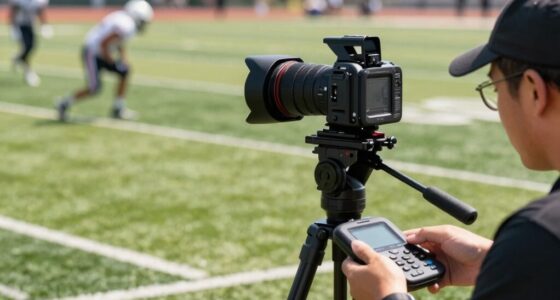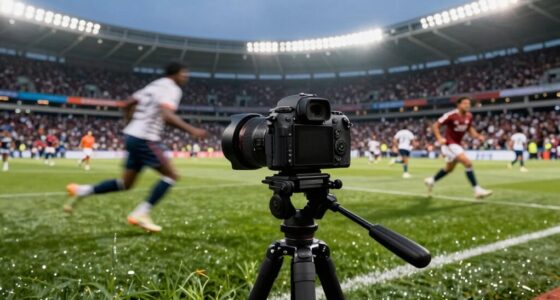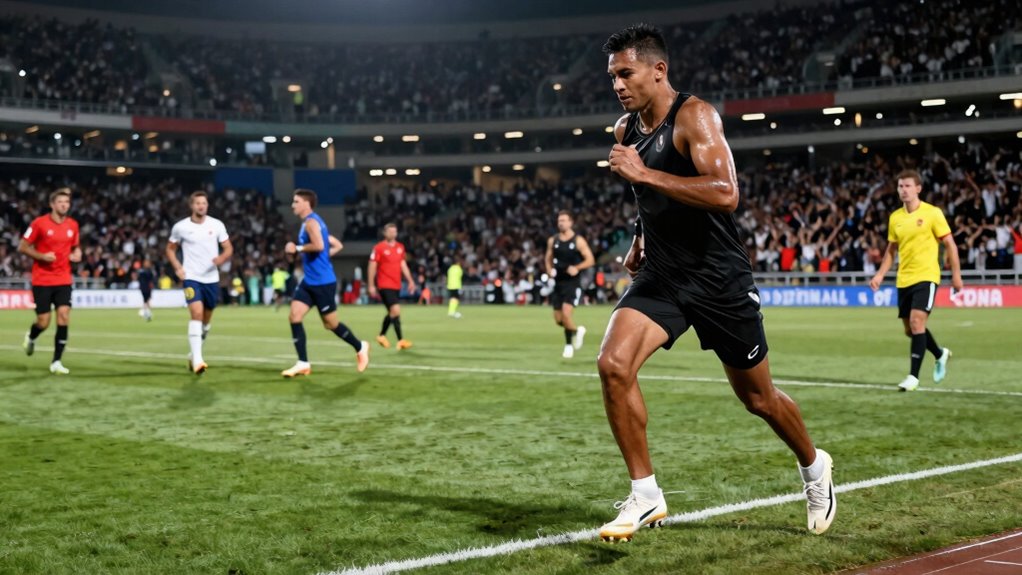

The secret to better sports photos is strategic sideline positioning—you need to anticipate key moments by observing player cues, crowd energy, and game flow. Don’t just stand in one spot; move to higher ground, avoid clutter, and use natural terrain to frame your shots. Consider lighting and weather, adjusting your position and camera settings accordingly. If you stay flexible and aware, you’ll capture more authentic, dynamic images. Keep exploring, and you’ll reveal how to elevate your sports photography even further.
Key Takeaways
- Proper sideline positioning involves understanding game flow and anticipating key moments for more impactful shots.
- Adjust your position based on sport-specific dynamics and environmental factors to avoid obstructions and improve visibility.
- Use natural terrain and environmental features creatively to frame shots and add depth to your images.
- Be proactive with equipment and lighting settings to adapt quickly to changing weather and lighting conditions.
- Combining strategic positioning with camera adjustments enhances spontaneity and captures authentic, memorable sports moments.
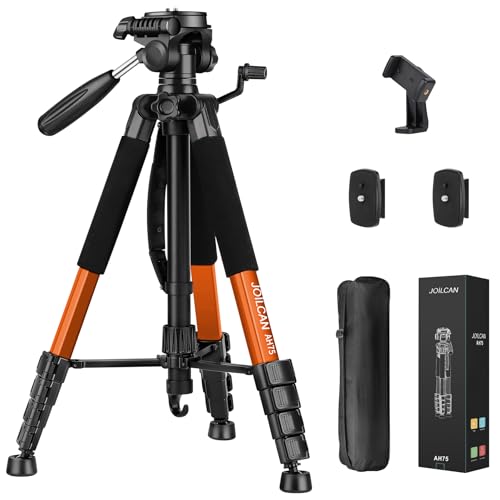
JOILCAN Tripod Camera Tripods, 74" Tripod for Camera Cell Phone Video Photography, Heavy Duty Tall Cameras Tripod Stand, Professional Travel DSLR Tripods Compatible with Canon iPhone, Max Load 15 LB
【Lightweight & Easy to Adjust】Upgraded trapezoidal flap lock tripod adjusted from 19.5" and 74" to meet different height…
As an affiliate, we earn on qualifying purchases.
As an affiliate, we earn on qualifying purchases.
Why Proper Sideline Positioning Matters in Sports Photography
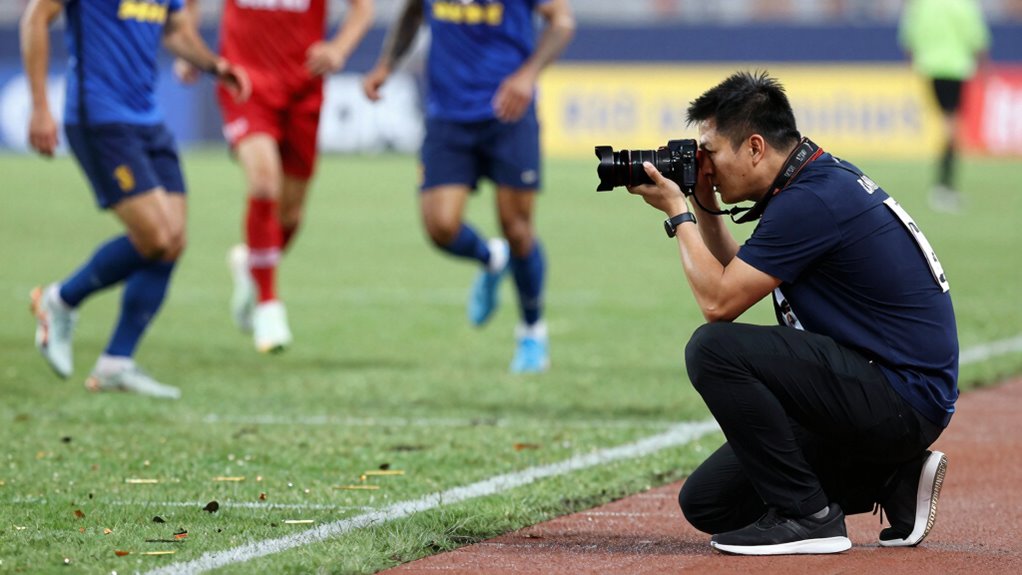
Proper sideline positioning is crucial in sports photography because it directly affects the quality and impact of your shots. When you position yourself correctly, you capture authentic player interactions that tell a compelling story. Good placement allows you to anticipate moments of celebration, confrontation, or teamwork, making your photos more dynamic. Equipment placement also matters; setting up your gear thoughtfully ensures you don’t obstruct the action or distract players. By staying aware of where the players are and how they move, you can position yourself to get clear, well-framed shots. Additionally, understanding the game dynamics can help you predict key moments before they happen, giving you a competitive edge. This strategic approach helps you avoid missed moments and shot distractions, ultimately elevating the visual storytelling of each game. Proper sideline positioning is essential for capturing powerful, memorable sports photos, especially when combined with an understanding of camera angles and how they influence the storytelling. Recognizing the importance of anticipating plays allows you to be ready for fleeting moments that define the game. Developing a keen sense of game flow further enhances your ability to position yourself effectively and seize those critical shots.

Canon EF 75-300mm f/4-5.6 III Telephoto Zoom Lens for Canon SLR Cameras
75-300 millimeter telephoto zoom lens with f 4-5.6 maximum aperture for Canon SLR cameras
As an affiliate, we earn on qualifying purchases.
As an affiliate, we earn on qualifying purchases.
How to Anticipate Action and Find the Best Spot
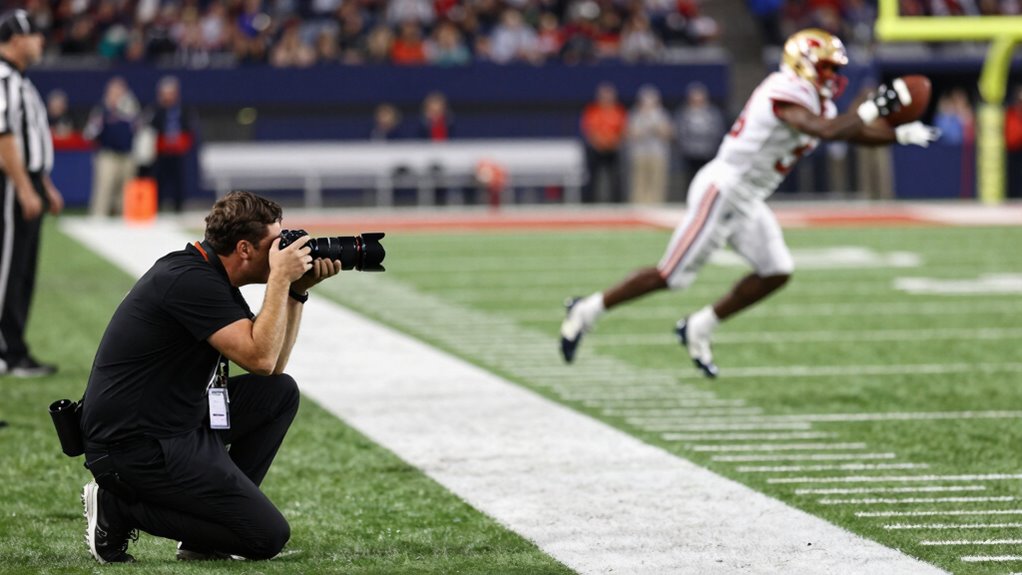
To capture the most dynamic moments, you need to anticipate where the action will unfold instead of just reacting to it. Pay close attention to player interaction—watch how players communicate and position themselves, which often signals upcoming plays. Observe crowd dynamics, as the energy and reactions can hint at key moments about to happen. Position yourself where these cues align, such as near the sideline where players are likely to converge or where the crowd’s enthusiasm peaks. Stay alert to shifts in play, and keep your camera ready. The best spot isn’t always the obvious one; it’s where your understanding of the game’s flow and player interactions intersect with crowd energy. Developing an awareness of game environment can help you better anticipate these moments. This anticipation puts you in the perfect position to capture explosive, memorable shots.

AKASO EK7000 4K30FPS 20MP WiFi Action Camera with EIS Ultra HD 131FT Waterproof Underwater Camera Remote Control 4X Zoom Support External Microphone Black
4K Ultra HD action camera: Professional 4K30Fps & 2.7K30Fps video with 20MP photos at up to 30 frames…
As an affiliate, we earn on qualifying purchases.
As an affiliate, we earn on qualifying purchases.
Top Sideline Positions for Different Sports
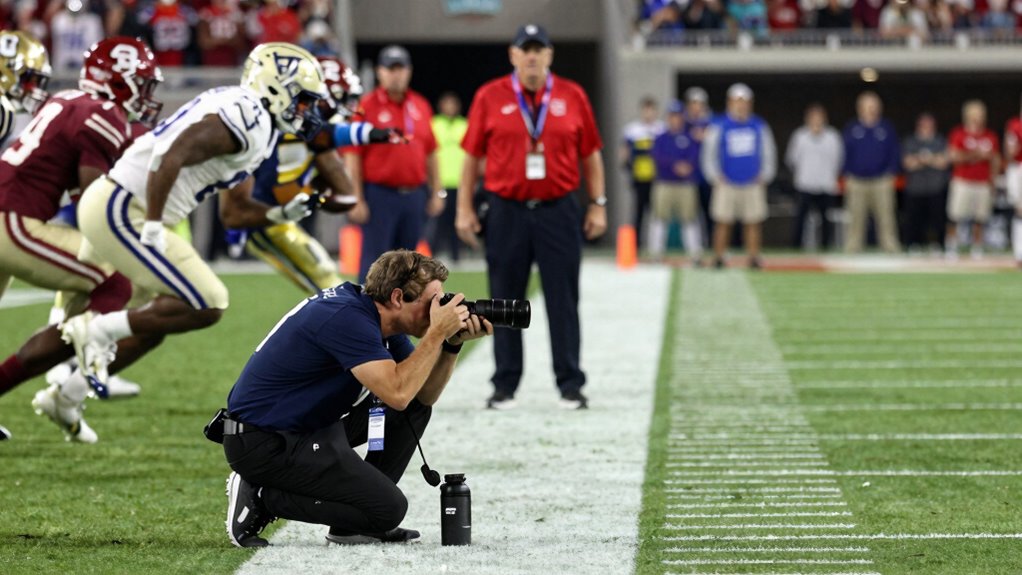
Different sports call for different sideline positions to maximize your chances of capturing compelling shots. In football, positioning near the end zones offers clear views of player interactions during touchdowns or celebrations, while keeping an eye on equipment placement like the goalposts. For basketball, sideline spots along the baseline let you capture intense player interactions and reactions during key plays, with a good angle for the hoop. In soccer, staying near the sideline at midfield provides a balanced view of player movement and interactions, plus a chance to frame team strategies. Always consider how equipment placement influences your shot, ensuring that it doesn’t block the action or distract from the players. Adjust your position to stay close to the action while maintaining a clear, unobstructed line of sight. Being aware of regional culture can also help you anticipate moments that truly capture the spirit of the game. Additionally, understanding sports dynamics can help you predict key moments, giving you an edge in capturing those fleeting, impactful shots. Paying attention to game tempo can also improve your timing and shot selection during fast-paced plays. Keeping an eye on crowd behavior can provide additional context and enhance the storytelling aspect of your sports photography.

Altura Photo 62-Inch Camera Monopod – Heavy Duty Stand for Canon, Nikon, & Sony Mirrorless & DSLR Cameras – Steady Photography, Lightweight & Portable – Easy to Carry with Pouch
LIGHTWEIGHT ALUMINUM DESIGN RETRACTABLE MONOPOD: Collapses down to a very compact 16.75” and weighs just .59 LBS. Fits…
As an affiliate, we earn on qualifying purchases.
As an affiliate, we earn on qualifying purchases.
Avoid Common Sideline Positioning Mistakes
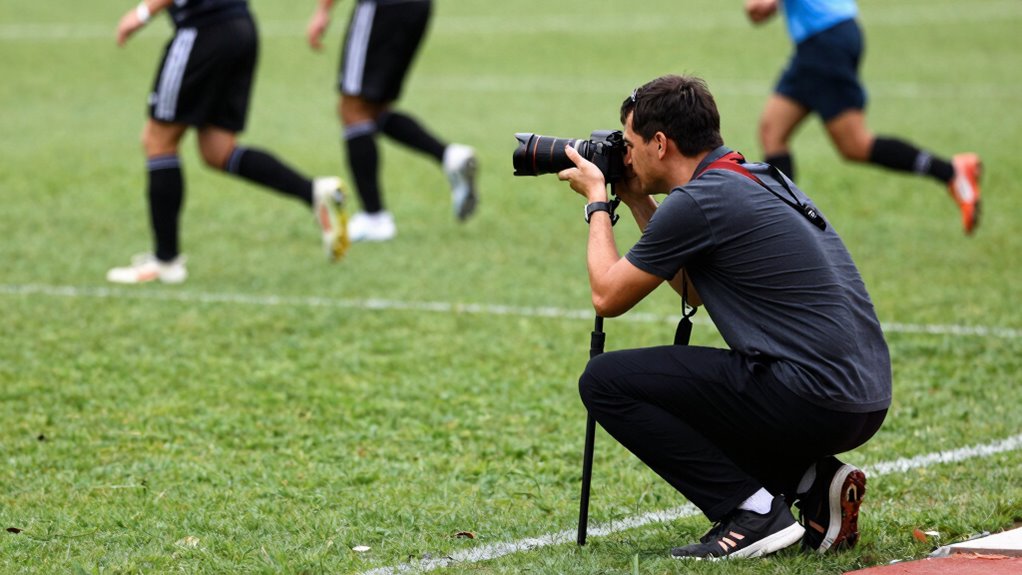
To get great shots, you need to keep a clear line of sight and avoid obstructions. Watch out for background clutter that can distract from the main action. Staying mindful of these details helps you capture sharp, compelling sports photos.
Maintain Clear Line of Sight
Ensuring a clear line of sight is essential for capturing sharp, compelling sports photos. You need to position yourself where you won’t obstruct the action or block teammates and officials. Before shooting, review your camera settings to optimize shutter speed, aperture, and ISO for fast-moving subjects. Your equipment choices also matter—use a lens with enough zoom to stay distant but still get close-up shots, while maintaining a good angle. Avoid standing behind players or in crowded areas where your view could be blocked. Keep an eye on the field to anticipate the play, and adjust your position if something is about to obscure your shot. Maintaining a clear line of sight allows you to capture dynamic moments without interruption or distraction.
Mind the Background Clutter
Background clutter can easily distract from the main action in your sports photos, so it’s essential to choose your sideline position carefully. Look for spots where the background is clean and unobtrusive. To avoid distraction, consider these factors:
- Stadium acoustics: Position yourself away from loudspeaker systems or equipment that create visual noise.
- Sideline etiquette: Stay clear of players and coaches, respecting their space and avoiding interference.
- Background elements: Watch for banners, signage, or equipment that might clutter the shot or clash with the action.
- Equipment placement: Be mindful of nearby small structures or items, which can inadvertently become part of the background and detract from the shot. Being aware of visual clutter can help you find the best angles and positions.
Using Terrain and Environment to Improve Your Shots
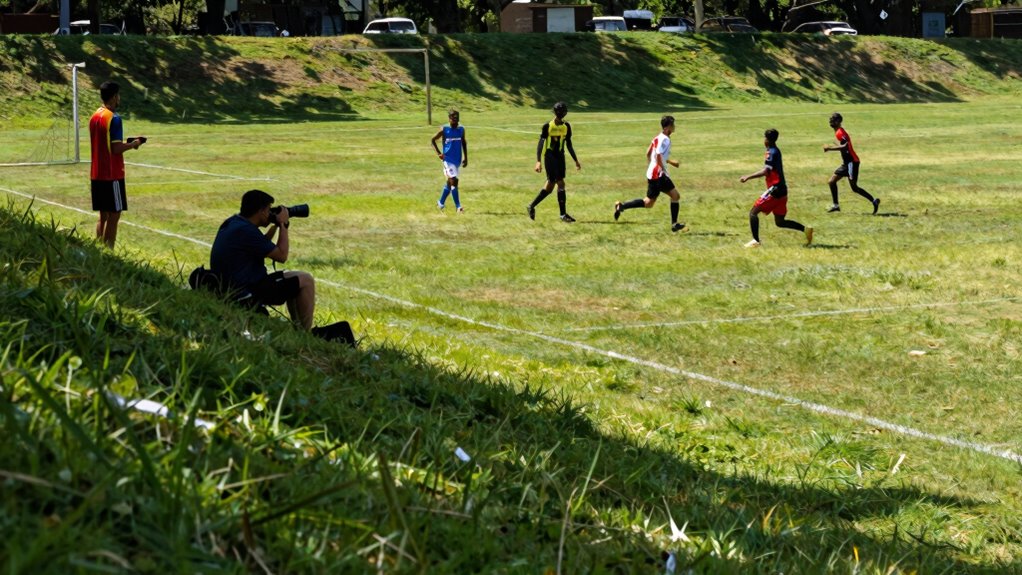
Using terrain and environment effectively can transform ordinary sports photos into compelling images that capture the intensity of the moment. Think about how natural features like slopes, sidelines, or even nearby trees can be used to enhance your shot. Adjust your camera angles to leverage these elements, creating a sense of depth or framing your subject better. Your equipment setup also matters—use a tripod or monopod to stabilize shots on uneven ground, and consider your position relative to the terrain to avoid distortion. By understanding the environment around you, you can find unique perspectives that add context and drama to your photos. Incorporating these elements allows you to tell a more vivid story, making your sports images stand out. Additionally, considering environmental awareness can help you anticipate how changing conditions might affect your shot, ensuring you’re always prepared to capture the perfect moment.
Adjusting Your Position for Lighting and Weather Conditions
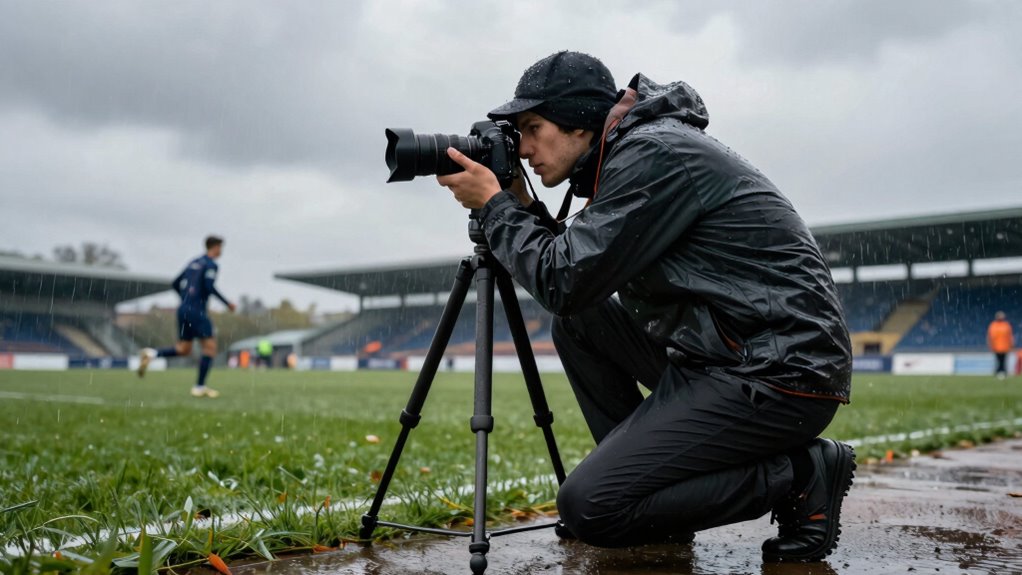
Adjusting your position based on lighting and weather conditions can greatly improve your sports photos. Weather considerations like rain, snow, or bright sunlight demand quick changes in your stance. For instance, you might:
- Move to shade during harsh midday sun to avoid squinting and overexposure.
- Shift to a different angle when facing the sun to prevent glare and ensure your subject is well-lit.
- Find shelter or a higher vantage point in rain or snow to stay dry and keep your equipment safe.
- Being aware of latest trends in photography equipment can help you adapt quickly to changing conditions and capture better shots.
Lighting adjustments help you capture clearer, more vibrant shots. By proactively changing your position, you control shadows, highlights, and reflections, making your photos stand out—even under tricky weather conditions.
Frequently Asked Questions
How Do I Stay Unobtrusive to Players and Officials?
To stay unobtrusive to players and officials, follow proper spectator etiquette and respect photographer permissions. Keep a low profile by avoiding sudden movements or loud noises that could distract them. Use a compact camera or a long lens to minimize your presence. Always be aware of your surroundings, stay out of the way of officials and players, and wait for appropriate moments to capture shots, ensuring you don’t interfere with the game.
What Gear Should I Carry for Quick Repositioning?
You should carry lightweight camera accessories like extra lenses, a monopod, and a quick adjustment tripod. These tools help you adapt fast without missing key moments. A compact gear bag guarantees easy access and mobility, so you can reposition quickly. By staying prepared with this gear, you keep your shots fresh and unobtrusive, capturing dynamic angles without disrupting the flow of the game or distracting players and officials.
How Do I Handle Crowded Sideline Environments?
In crowded sideline environments, you handle crowd management by staying vigilant and maintaining awareness of your surroundings. Keep your equipment logistics simple—use compact gear and quick-access bags to avoid clutter. Position yourself strategically, ideally where the crowd is less dense, and communicate with team members to coordinate movement. Stay patient, adapt quickly, and prioritize safety, ensuring you capture great shots without getting overwhelmed or obstructed by the crowd.
What’s the Best Way to Capture Emotion From Sidelines?
To capture emotion from the sidelines, focus on authentic player expressions and crowd reactions. Keep your camera ready to seize genuine moments, especially during intense plays or celebrations. Position yourself where you can clearly see both players and spectators, and stay alert for spontaneous reactions. Using a fast shutter speed helps freeze these fleeting emotions, ensuring you don’t miss those powerful, emotional shots that truly tell the story of the game.
How Early Should I Arrive to Secure the Best Spots?
You should arrive at least an hour early—preferably when the stadium’s still empty—armed with your equipment checklist and a keen eye for shooting angles. This way, you beat the chaos, secure prime spots, and avoid the frantic scramble. Early arrival gives you the luxury of choosing the perfect angle, setting up your gear, and capturing those raw, emotional moments without fighting for space or missing key action.
Conclusion
Mastering sideline positioning isn’t just about technical skill; it’s about reading the game and the environment. When you anticipate action and adapt to terrain and weather, you often find yourself in the perfect spot—sometimes by chance, sometimes by insight. Embrace these moments, and you’ll capture not just images, but the spirit of the game itself. After all, the best shots often come from those subtle, serendipitous decisions you make along the way.