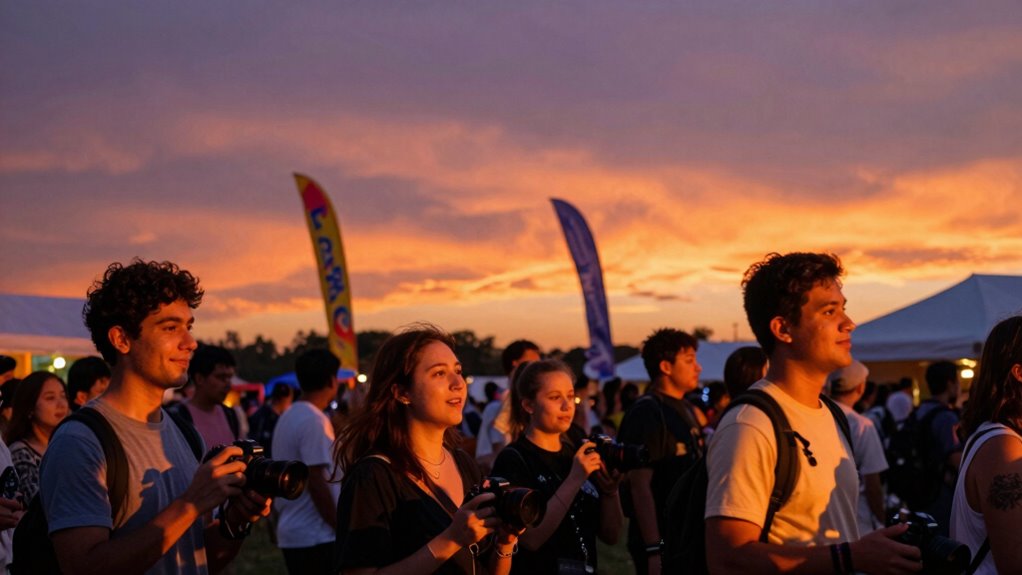

Shooting in changing light at events is harder than it looks because you need to constantly adjust your camera settings to keep images well-exposed and sharp as lighting shifts quickly. Moving between bright spots and dim areas affects exposure, white balance, and shadows, making it easy to get over- or underexposed shots. Mastering this requires quick thinking and practice. Keep going, and you’ll discover the key techniques to stay ahead of unpredictable lighting conditions.
Key Takeaways
- Rapidly shifting light conditions cause exposure challenges, making it difficult to maintain consistent, well-balanced photos.
- Different lighting sources and intensities can create color casts, complicating accurate white balance adjustments.
- Variations in brightness and contrast require quick camera setting changes, demanding high skill and experience.
- Unpredictable lighting patterns affect mood and atmosphere, requiring creative adaptation and technical finesse.
- Balancing sharpness, exposure, and color in real-time under changing conditions increases the risk of mistakes.
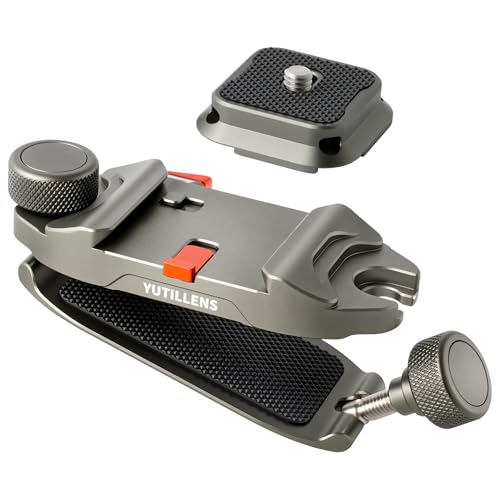
YUTILLENS Camera Backpack Clip with Arca-Style Quick Release and Anti-Drop Dual-Lock, Max Load 66 lb Aluminum Clip for Mirrorless/DSLR Cameras, Hands-Free for Hiking Travel and Street Photography
Quick-Release Arca-Style Compatibility:Features an Arca-Style quick-release plate compatible with most tripods and gimbals—attach or detach your camera in…
As an affiliate, we earn on qualifying purchases.
As an affiliate, we earn on qualifying purchases.
Why Changing Light Conditions Make Event Photography Challenging
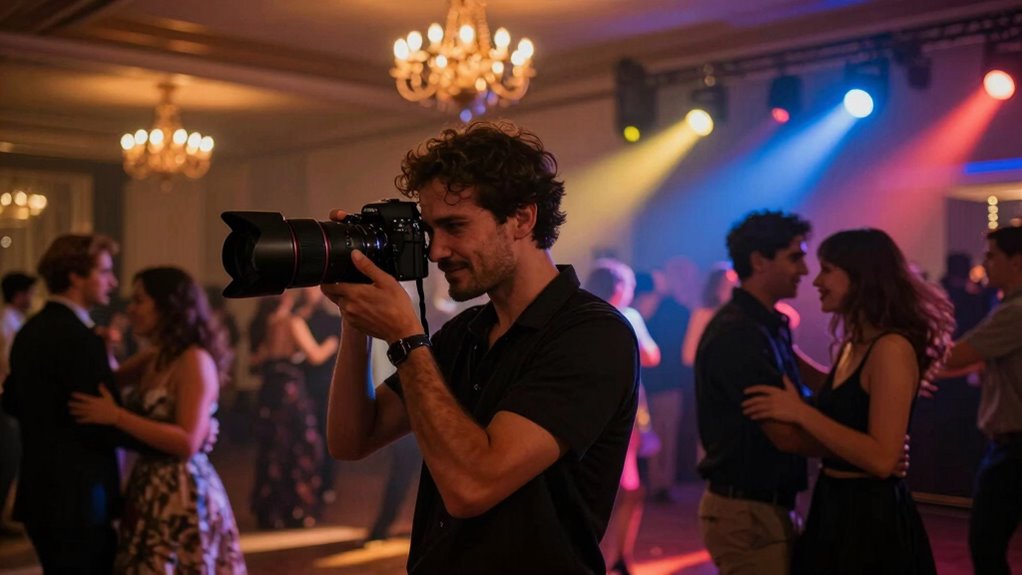
Changing light conditions during an event can drastically affect your ability to capture sharp, well-exposed photos. Lighting unpredictability makes it tough to maintain consistent exposure, forcing you to adapt quickly. As the event atmosphere shifts—from bright sunlight to dim indoor lighting or flickering stage lights—your camera settings may no longer be suitable. This variability can lead to overexposed or underexposed images, ruining shots you’ve worked hard to get. Additionally, the changing light influences the mood and vibe of the event, making it essential to reflect that atmosphere accurately. You need to stay alert and flexible to handle these shifts, or risk missing key moments. Recognizing how lighting conditions fluctuate helps you anticipate challenges and guarantees your photos consistently capture the event’s true spirit. Being aware of lighting changes allows photographers to make quick adjustments, ensuring they don’t miss those fleeting, memorable moments. Understanding the impact of regional lighting environments can also help you better prepare for various scenarios.

8K Digital Camera, 88MP WiFi Cameras for Photography with 3.2" Touchscreen, 16X Zoom Autofocus Professional Dual Camera, Anti-Shake, 2 Batteries & Charging Stand, 64GB Card, Flash, Lens Hood
【8K Clarity Meets 6-Axis Stability】The digital camera capture every moment in breathtaking detail with true 8K UHD video…
As an affiliate, we earn on qualifying purchases.
As an affiliate, we earn on qualifying purchases.
How to Adjust Camera Settings Quickly for Different Light

When light shifts unexpectedly during an event, your ability to quickly adjust your camera settings can mean the difference between a great shot and a missed opportunity. Start by observing the light color—notice if it’s warm, cool, or changing with time. Adjust your white balance to match the current lighting for accurate colors. Use camera ergonomics to your advantage: keep your settings accessible on your camera’s quick menu or dedicated buttons, so you can make rapid changes. Switch between ISO, aperture, and shutter speed swiftly to adapt to new lighting conditions. Practice these adjustments beforehand, so they become instinctive. Staying alert to changes in light color and optimizing your camera’s ergonomics ensures you capture sharp, well-exposed images despite unpredictable lighting shifts. Understanding how to respond to changing light conditions and having a quick-access setup can significantly improve your photography outcomes. Additionally, familiarizing yourself with camera settings and how they interact under different lighting helps you make faster, more confident decisions during dynamic events. Being aware of light quality can also help you anticipate necessary adjustments before the light changes drastically. Developing a routine for quick camera adjustments can further enhance your ability to adapt swiftly in varied lighting environments.

Prime-Line H 3787 Steel Tilt Balance Tension Tool, 10 Inch Length, Chrome Plated (Single Pack)
TENSIONER TOOL – This spiral balance tensioning tool is used for winding spiral balances on tilt style windows
As an affiliate, we earn on qualifying purchases.
As an affiliate, we earn on qualifying purchases.
Common Mistakes to Avoid When Shooting in Variable Light

While adjusting camera settings quickly can help you keep up with shifting light, it’s easy to make mistakes that hurt your photos. One common mistake is believing lighting myths, like thinking high ISO always results in poor quality; modern cameras handle higher ISOs better than you think. Another error is neglecting proper color correction; when lighting changes, your images can develop undesirable color casts. Relying solely on auto white balance can lead to unnatural hues, so manually adjusting or shooting in raw helps you fix this later. Avoid assuming you can fix everything in post-production—poor exposure and incorrect color balance can’t always be fully corrected. Staying aware of these pitfalls helps you produce consistent, high-quality images despite changing light conditions. Understanding smart appliances and their impact on home environments can also inspire creative lighting setups for event photography, especially as technological advancements continue to influence the way we approach lighting and scene control. Additionally, familiarizing yourself with camera sensor technology can help you better anticipate how your gear will perform under variable lighting.
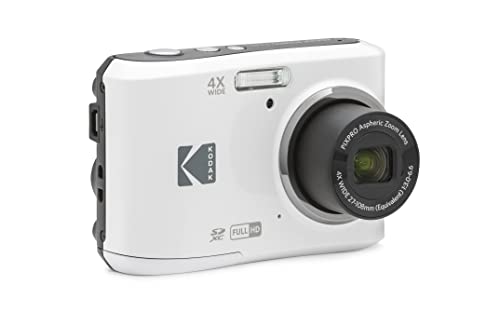
Kodak PIXPRO Friendly Zoom FZ45-WH 16MP Digital Camera with 4X Optical Zoom 27mm Wide Angle and 2.7" LCD Screen (White)
Sixteen Megapixel Sensor: Captures detailed photos with a sixteen MP CMOS sensor for everyday shooting
As an affiliate, we earn on qualifying purchases.
As an affiliate, we earn on qualifying purchases.
Techniques for Balancing Bright and Dark Areas in Your Shots

To balance bright and dark areas in your shots, start by adjusting your exposure settings to prevent overexposure or underexposure. Using HDR techniques can help capture full detail in high-contrast scenes, while graduated filters allow you to selectively darken or brighten parts of your image. These tools give you more control over challenging lighting conditions at events.
Adjust Exposure Settings
Balancing bright and dark areas in your shots can be challenging, especially in changing lighting conditions at events. Adjusting your exposure settings helps manage this by controlling how much light hits your sensor. Pay attention to lighting patterns, as they influence where shadows and highlights fall, impacting your exposure choices. Use your camera’s metering mode to gauge the overall scene or specific areas. Also, consider the color temperature; a warmer or cooler light source can affect how your camera exposes the scene. Slightly underexposing in bright areas prevents blown-out highlights, while increasing exposure in darker sections reveals detail. Constantly monitor your LCD or viewfinder to fine-tune exposure settings, ensuring a balanced shot despite the unpredictable lighting changes.
Use HDR Techniques
When you face challenging lighting conditions at events, capturing detail in both bright and dark areas can be difficult with standard exposure adjustments alone. That’s where HDR techniques come in. By taking multiple shots at different exposures and merging them, you can balance the extremes of event lighting. This process helps preserve highlights and shadows, revealing details that might otherwise be lost. As a photographer, awareness of your camera’s HDR capabilities is essential—knowing when and how to activate it makes a big difference. Use HDR selectively, especially when lighting is uneven or rapidly changing. This technique ensures your images accurately reflect the scene’s dynamic range, making your shots more vibrant and true to life, even in challenging lighting conditions. Incorporating HDR techniques into your workflow can significantly improve your ability to capture stunning images under complex lighting.
Employ Graduated Filters
Employing graduated filters can be a powerful way to tame difficult lighting contrasts in your shots, especially at events where the scene often includes bright backgrounds and dark foregrounds. These filters gradually shift from clear to tinted, allowing you to balance exposure directly in-camera. By using graduated filters, you can prevent blown-out skies or underexposed subjects, reducing the need for extensive post-processing. They’re particularly useful when combined with color grading, as they help maintain natural color transitions across the scene. This technique allows you to capture more dynamic images without sacrificing detail in either the highlights or shadows. With practice, graduated filters become a reliable tool for creating well-balanced shots in ever-changing lighting conditions at events.
What Gear Helps You Capture Better Photos in Changing Light
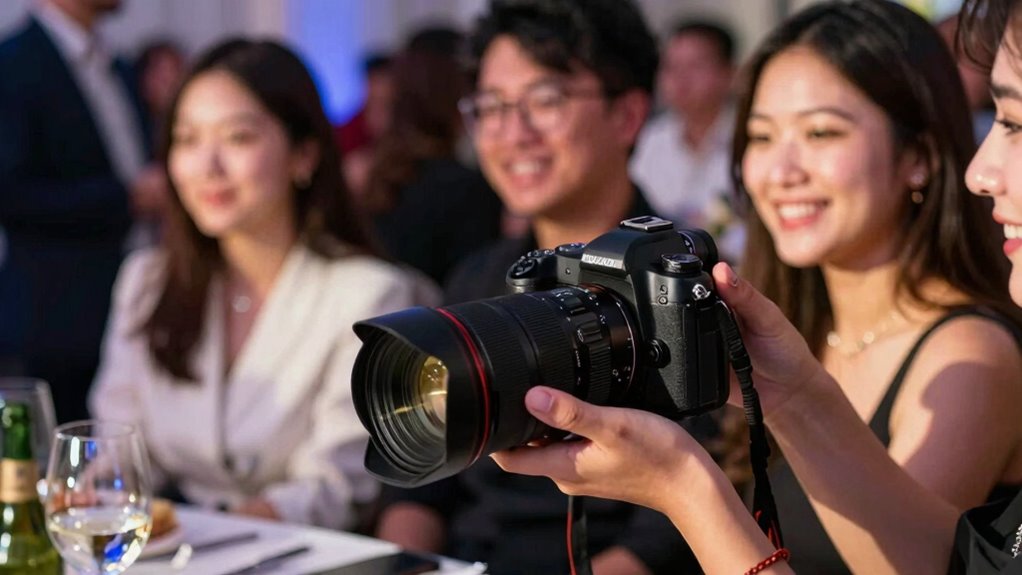
Using fast lenses gives you the flexibility to shoot in varying light conditions without sacrificing image quality. High ISO performance on your camera allows you to brighten dark scenes without excessive noise. Proper exposure settings are essential for adapting to changing light quickly, ensuring your photos remain sharp and well-exposed even as lighting shifts rapidly. Together, these tools help you capture sharp, well-exposed photos even as lighting changes rapidly.
Fast Lenses for Flexibility
Fast lenses with wide apertures are essential tools for capturing sharp, well-exposed photos in changing light conditions. A large lens aperture, like f/1.4 or f/2.8, allows more light to reach your sensor, making it easier to shoot in low-light situations without sacrificing image quality. The focal length of your lens also impacts flexibility; a versatile zoom lens, such as 24-70mm, lets you quickly adapt to different scenes and distances. These lenses enable you to keep shutter speeds high enough to avoid blur, even when light fluctuates. By choosing fast lenses, you gain the ability to shoot confidently across a variety of lighting scenarios, ensuring your photos remain crisp, clear, and properly exposed regardless of changing conditions.
High ISO Performance
Ever wondered how some photographers manage to capture sharp images in rapidly changing light? High ISO performance plays a key role. When light shifts suddenly, cranking up your camera’s ISO allows you to maintain fast shutter speeds without sacrificing exposure. This technique is especially useful for dynamic lighting conditions, where constant adjustments are needed to keep up with the scene. This adaptability can significantly improve your chances of capturing sharp, well-exposed photos despite unpredictable lighting. This helps you freeze motion and capture moments with clarity. To maximize results, choose gear with excellent noise control at higher ISO settings, giving you cleaner images. Remember, creative composition becomes even more important in tricky lighting—use your gear’s capabilities to focus on framing rather than worrying about noise. Additionally, proper equipment maintenance guarantees your camera performs at its best during these moments. Regularly cleaning your sensor and updating firmware helps you trust your gear when it matters most, making high ISO performance a reliable tool in your event photography arsenal. Understanding camera sensors can further improve your ability to shoot effectively in changing light conditions. Moreover, selecting the right camera settings can make a noticeable difference when working in fluctuating light.
Practice Tips to Improve Your Dynamic Lighting Skills
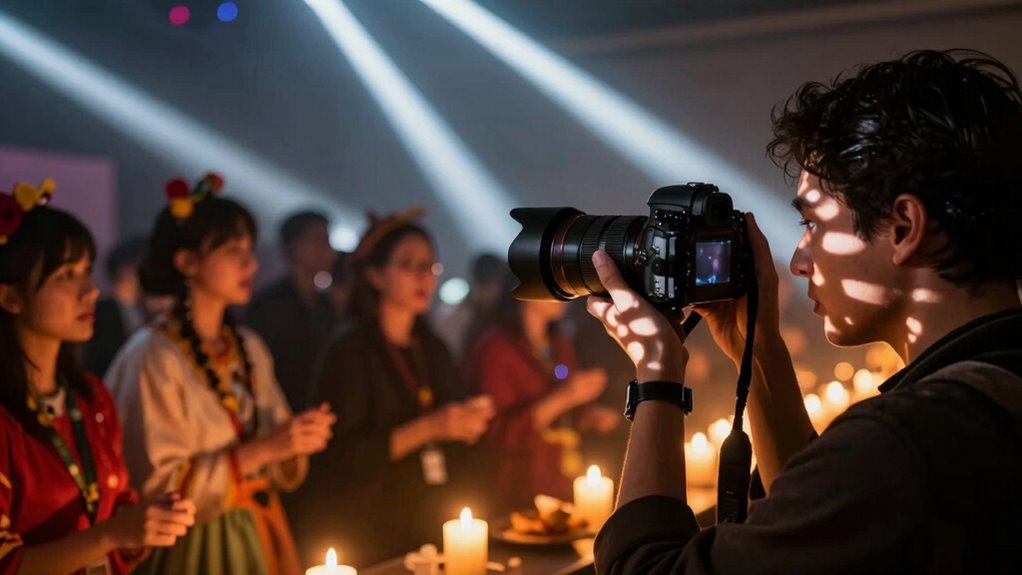
Practicing dynamic lighting requires intentional effort to sharpen your skills in adapting to changing conditions. Focus on understanding how lighting aesthetics influence your images, and experiment with different angles and settings to see how light shapes the scene. Pay close attention to color temperature shifts, as they dramatically alter the mood and realism of your photos. Use manual mode to adjust white balance on the fly, helping you respond quickly to changing light sources. Practice photographing scenes with mixed lighting—natural, artificial, and reflected—to develop an intuitive sense of how to balance exposure and color. Regularly reviewing your shots will reveal patterns and areas for improvement, making you more confident and adaptable when shooting in unpredictable, fast-paced event environments. Additionally, understanding the fundamentals of lighting design can help you anticipate how light will behave in different scenarios, giving you a strategic advantage. Developing a comprehensive understanding of light can also enhance your ability to control and manipulate lighting conditions creatively. Exploring lighting principles can deepen your insight into how different sources interact, further improving your dynamic lighting skills. To better adapt to changing conditions, it’s also helpful to study lighting patterns and how they influence visual storytelling. Gaining knowledge about the different lighting environments you encounter can prepare you to make quick adjustments and capture compelling images.
How to Post-Process and Enhance Photos Taken in Changing Light

When editing photos taken in changing light conditions, your goal is to restore consistency and balance to the overall image. Start by adjusting the color temperature to correct any unnatural hues caused by shifting light sources. Use tools like white balance sliders to match the lighting across different areas, ensuring color temperature feels natural and uniform. Next, focus on maintaining lighting consistency by fine-tuning exposure and contrast, especially if parts of the photo appear too bright or dark. Use local adjustment tools to target specific areas with different lighting conditions. By carefully balancing these elements, you create a cohesive image that accurately reflects the scene’s true ambiance. This process helps your photos look polished, professional, and true to life despite the challenging lighting variations.
Final Tips for Mastering Lighting at Events
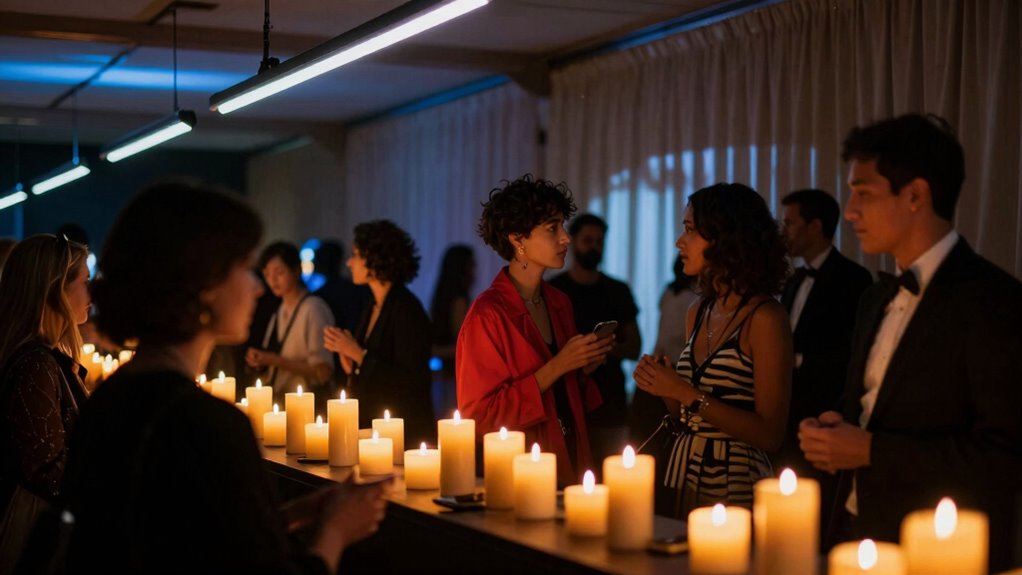
Mastering lighting at events requires more than just adjusting camera settings; it involves applying practical tips to guarantee your photos look consistent and professional. Pay attention to color temperature to assure skin tones and ambient lighting match, avoiding unnatural color casts. Use flash synchronization carefully; timing your flash with the shutter helps freeze motion and balance light. Keep a portable light meter or use your camera’s histogram to monitor exposure adjustments. Being mindful of animal welfare considerations can also help you capture more natural and relaxed shots of animals at events. Adjust your camera’s white balance to match the lighting conditions. Use manual flash settings to control light output and avoid overexposure. Experiment with different angles to minimize harsh shadows. Regularly check and tweak your camera’s color temperature and flash sync to adapt to changing light conditions. Understanding lighting conditions can significantly improve your ability to adapt quickly and capture well-lit photos in fluctuating environments.
Frequently Asked Questions
What Are the Best Camera Settings for Unpredictable Lighting?
You should set your camera to manual mode, adjusting ISO, aperture, and shutter speed for unpredictable lighting. Use lens filters to manage glare or color shifts, and keep your ISO as low as possible to avoid noise. Incorporate flash techniques, like bouncing or diffusing, to fill in shadows and balance light. Constantly review your shots and tweak settings on the fly, ensuring you capture well-exposed images despite changing conditions.
How Can I Prevent Overexposed or Underexposed Shots?
To prevent overexposed or underexposed shots, you should use proper lighting techniques and make quick exposure adjustments. Keep an eye on your camera’s histogram to gauge exposure levels accurately. Use manual mode or exposure compensation to fine-tune settings as lighting changes. Additionally, shooting in RAW gives you more flexibility in post-processing to correct exposure issues, ensuring your images look balanced regardless of changing light conditions.
What Accessories Can Help Manage Changing Light Conditions?
Did you know that 78% of photographers find managing changing light challenging? To tackle this, you can use accessories like flash diffusers to soften harsh lighting and lens filters to adjust color and exposure. These tools help you maintain consistent shots despite fluctuating conditions. Keep a variety of these accessories on hand, so you’re ready to adapt quickly and capture sharp, well-exposed images in any lighting situation.
How Do I Maintain Consistent Color Balance Across Shots?
To maintain consistent color balance across shots, you should set your camera’s white balance manually for each lighting condition or use a custom white balance. Avoid relying solely on auto white balance, as it can fluctuate. After shooting, apply color correction in post-processing to fine-tune your footage. This approach guarantees your colors stay uniform, even as lighting changes, making your event coverage look professional and cohesive.
Is It Better to Shoot in Manual or Automatic Mode in Variable Light?
You should shoot in manual mode, especially in changing light, to stay in control. Think of your camera as a painter—manual mode lets you select the perfect settings, just like choosing the right lens filters and shooting angles to craft your masterpiece. Automatic mode may seem easier, but it can be unpredictable with variable light. Take charge, adjust your settings, and let your creativity shine through every shot.
Conclusion
Mastering changing light at events isn’t easy, but with practice, you can capture stunning photos that truly stand out. Did you know that over 60% of professional photographers say adapting to variable lighting is their biggest challenge? By understanding your gear, practicing quick adjustments, and refining your post-processing skills, you’ll boost your confidence and creativity. Keep experimenting and stay prepared—your best shots are just a few quick tweaks away!