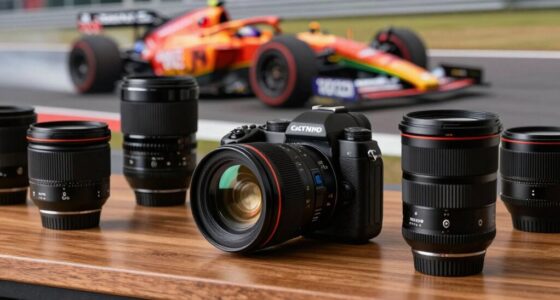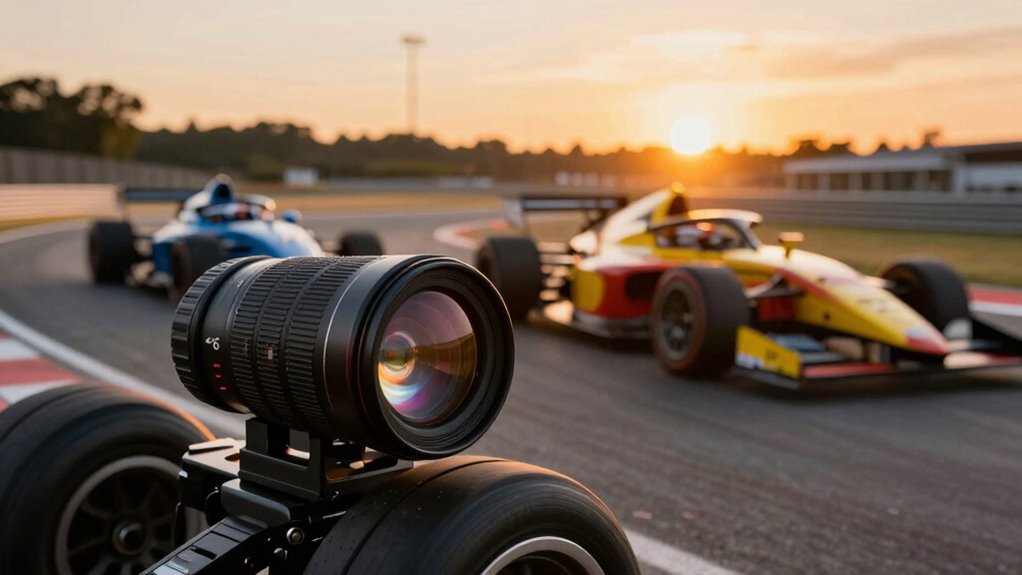

When choosing lenses for race track photography, focus on focal length, aperture size, and autofocus speed. Longer focal lengths help you capture close-ups from a distance, while wide apertures let in more light, perfect for fast-moving subjects. Quick autofocus is essential to track cars effectively. Stabilization features can enhance clarity, making all the difference in dynamic environments. These elements greatly influence your shots, and there’s much more to discover about optimizing your lens choices.
Key Takeaways
- Focal Length: Longer focal lengths (200mm+) are ideal for capturing action from a distance without needing to be trackside.
- Aperture Size: Wide apertures (e.g., f/2.8) allow for better light intake and highlight subjects against blurred backgrounds in varied lighting conditions.
- Lens Types: Prime lenses deliver superior image quality and faster autofocus, making them suitable for serious photographers focused on sharp images.
- Stabilization Features: Built-in image stabilization minimizes camera shake, crucial for panning shots of fast-moving cars and handheld shooting.
- Autofocus Speed: Quick autofocus is essential for tracking fast-moving vehicles, ensuring sharp focus and capturing critical moments during races.
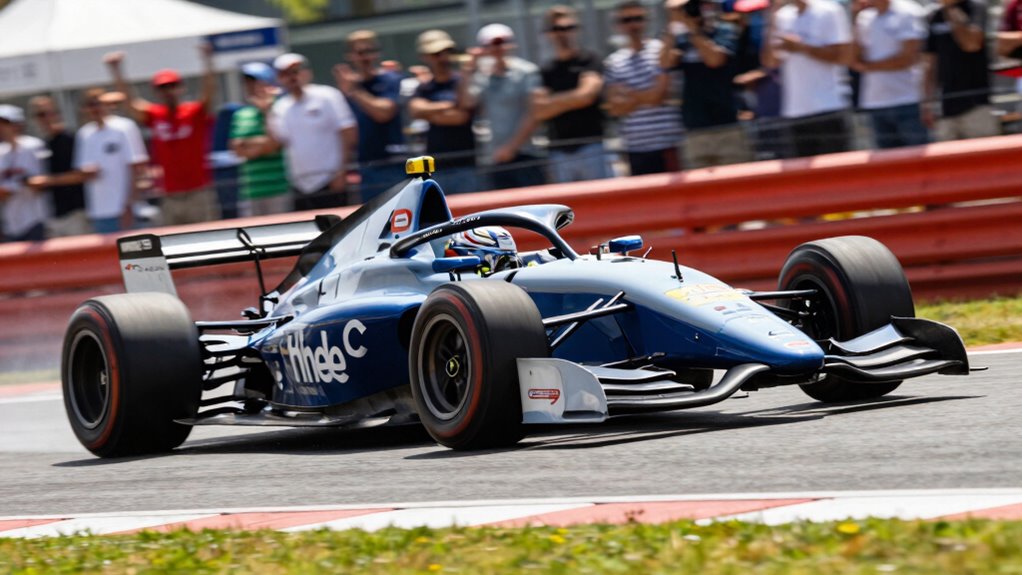
When you’re capturing the thrill of race track photography, choosing the right lens can make all the difference. The excitement of zooming cars demands a lens that can keep up, so understanding the fundamental features is key. First off, focal length plays a significant role in your shots. A longer focal length, like 200mm or more, allows you to get close-ups of the action from a distance. This is especially helpful if you’re stuck in the stands and can’t get trackside.
Aperture size is another essential factor. A lens with a wide aperture (like f/2.8) lets in more light, which is great for tracking fast-moving subjects in varying light conditions. This larger aperture also creates a beautiful depth of field, making your subject pop against a blurred background. Lens types matter too; prime lenses often offer superior image quality and faster autofocus speed compared to zoom lenses. If you’re serious about capturing the sharpest images, investing in a high-quality prime lens can be a game-changer.
A wide aperture lens is crucial for capturing fast-moving subjects, enhancing depth of field and image quality.
Stabilization features can’t be overlooked. Race track photography often involves panning to follow speeding cars, and having a lens with built-in image stabilization will help reduce blur from camera shake. This is especially important when you’re shooting handheld. If you’re planning to shoot in different weather conditions, look for lenses with weather resistance. A little rain shouldn’t stop you from getting that perfect shot, and a durable lens can withstand the elements.
Autofocus speed is another key consideration. In the fast-paced world of racing, you don’t want to miss that perfect moment because your lens is slow to focus. Look for lenses that boast quick and accurate autofocus systems. This capability allows you to track cars effortlessly as they zoom past. Understanding focal length and its impact can help you select the best lens for different scenarios on the track. Additionally, choosing lenses with optical performance in mind ensures your images will be sharp and vibrant, capturing every detail of the race. Knowing about lens durability can also ensure your gear withstands the demanding environment of race days.

Canon RF70-200mm F4 L is USM Lens, Telephoto Zoom Lens, Compatible with EOS R Series Mirrorless Cameras, White
Canon’s shortest and lightest 70-200mm f/4 interchangeable zoom lens.
As an affiliate, we earn on qualifying purchases.
As an affiliate, we earn on qualifying purchases.
Frequently Asked Questions
What Budget Should I Set for Race Track Photography Lenses?
You should set a budget between $500 and $2,000 for race track photography lenses. Consider investing in fast prime lenses or versatile zoom lenses with varying focal lengths, like 24-70mm or 70-200mm. These options will help you capture sharp images of fast-moving cars. Don’t forget to factor in additional costs for accessories like filters and tripod mounts, which can enhance your shooting experience and results on the track.
Are Prime Lenses Better Than Zoom Lenses for This Type of Photography?
When it comes to race track photography, think of prime lenses as a cheetah—fast and focused. Their fixed focal length usually offers a wider aperture, meaning better lens speed for those action shots. You’ll capture crisp images even in low light. Zoom lenses provide versatility, but they can’t match the sharpness and speed of primes. If you want stunning clarity, prime lenses are often the better choice for capturing the thrill of the race.
How Important Is Image Stabilization in Race Track Photography Lenses?
Image stabilization is essential for race track photography. It helps you capture sharp images, even while tracking fast-moving cars. Without it, you risk losing image clarity, especially in low light or when using longer focal lengths. Make sure your lens is compatible with your camera body’s stabilization features for the best results. With the right setup, you’ll minimize blur and enhance your overall shooting experience, leading to stunning race day shots.
What Accessories Are Essential for Race Track Photography Lens Care?
For effective race track photography, you need essential accessories like lens cleaning kits and protective filters. Many believe a simple wipe is enough, but without proper cleaning supplies, you could scratch your lens. A quality lens cleaning solution and microfiber cloth can keep your glass pristine. Additionally, using protective filters not only shields your lens from dust and scratches but also enhances image quality. So, gear up to protect your investment!
Can I Use My Smartphone for Race Track Photography Effectively?
Yes, you can use your smartphone for race track photography effectively, but it has limitations. In fast-paced race track settings, your smartphone might struggle with autofocus speed and low-light performance. While you can capture some great shots, you won’t achieve the same quality as with a dedicated camera and lens. To maximize your smartphone’s potential, use burst mode and edit the images afterward for the best results.

Canon EF 24-70mm f/2.8L II USM Standard Zoom Lens Black
24-70mm focal length, 38.4-112mm equivalent focal length on Canon APS-C cameras
As an affiliate, we earn on qualifying purchases.
As an affiliate, we earn on qualifying purchases.
Conclusion
In the fast-paced world of race track photography, choosing the right lens is like picking your favorite steed in a legendary race. Whether you’re capturing the roar of engines or the thrill of the finish line, the lens you select can make all the difference. Remember, it’s not just about zoom; it’s about clarity, speed, and keeping the action in focus. So, gear up, and let your lens be the magic wand that brings the race to life!

Canon EF-S 17-55mm f/2.8 is USM Lens | Professional APS-C Standard Zoom with Constant f/2.8 Aperture, Optical Image Stabilization & Fast USM AF | for Portraits & Events (1242B002) + Filter Kit + More
Canon USA Authorized. Items Include: Canon EF-S 17-55mm f/2.8 IS USM Lens, Lens Case, 77mm Filter Kit, Lens…
As an affiliate, we earn on qualifying purchases.
As an affiliate, we earn on qualifying purchases.
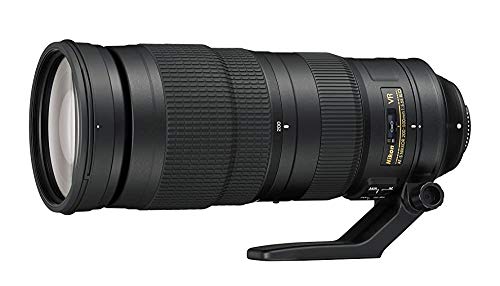
Nikon AF-S FX NIKKOR 200-500mm f/5.6E ED Vibration Reduction Zoom Lens with Auto Focus for Nikon DSLR Cameras (Renewed)
500mm of zoom power on FX-format DSLRs; 750mm equivalent on DX-format DSLRS
As an affiliate, we earn on qualifying purchases.
As an affiliate, we earn on qualifying purchases.